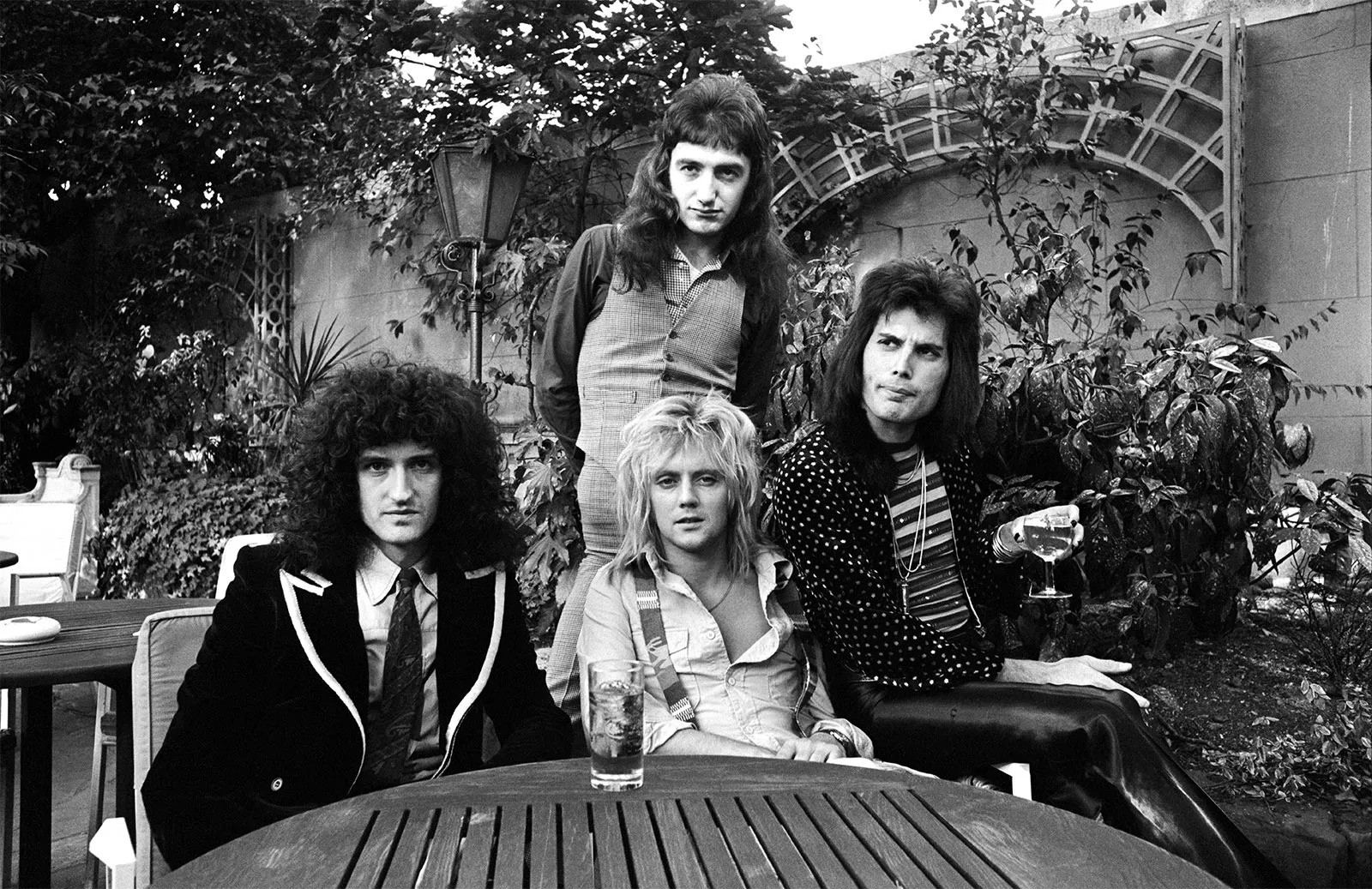
Queen was never a band to follow trends; they were a band that created them. From the very beginning, they defied conventional musical boundaries, refusing to be boxed into a single genre. Instead, they crafted a sound that was theatrical yet grounded, complex yet accessible, and utterly distinctive. Their unique fusion of opera, rock, and pop transformed the landscape of modern music, leaving an indelible mark on both fans and fellow musicians alike.
A Band Built on Ambition
Queen’s journey began with four remarkable musicians—Freddie Mercury, Brian May, Roger Taylor, and John Deacon—each bringing something essential to the mix. Freddie Mercury’s background in piano and performance, combined with his natural flair for drama, gave the band a sense of grandeur. Brian May’s guitar work blended technical precision with expressive storytelling, while Roger Taylor’s powerhouse drumming injected energy and dynamics into every track. John Deacon’s understated yet sophisticated bass lines added a foundation that allowed the other elements to soar. Together, they formed an ensemble capable of exploring new musical territories that most bands wouldn’t dare to touch.
Queen’s ambition was clear from their earliest albums. They weren’t content to replicate the blues-rock formulas dominating the 1970s. Instead, they embraced theatricality, experimented with studio effects, and combined influences that ranged from classical opera to contemporary pop. This eclectic approach set the stage for a sound that was as unpredictable as it was brilliant. Their creativity and flair were so influential that even modern show-stopping displays, like Christmas light installation in Baltimore, reflect a similar bold attention to detail and spectacle.

The Operatic Influence
One of the most remarkable aspects of Queen’s music was their embrace of operatic elements. Freddie Mercury, a fan of opera and musical theater, often envisioned songs with multiple layers, dramatic shifts, and grand climaxes. Tracks like “Bohemian Rhapsody” exemplify this ambition. The song seamlessly transitions from a contemplative ballad to operatic grandeur, then into a hard rock section, creating an emotional rollercoaster that was unprecedented in popular music.
The operatic influence extended beyond vocals. Queen employed layered harmonies, complex arrangements, and theatrical pacing, borrowing techniques traditionally reserved for classical music. Their use of vocal overdubs to create a choir-like effect gave songs a rich, multi-dimensional texture. This approach allowed them to infuse pop and rock with a sense of majesty and drama rarely seen in mainstream music.
By blending opera with rock, Queen created a new kind of storytelling in music. The songs became narratives, with tension, release, and intricate emotional arcs that mirrored a theatrical performance. Fans were not just listening—they were experiencing a mini-opera in every track.
Rock as the Foundation
While opera brought drama, rock provided the backbone. Brian May’s guitar work is central to Queen’s sound, combining virtuosity with melody. Songs like “We Will Rock You” and “Stone Cold Crazy” showcase the band’s ability to harness raw rock energy while still embracing melodic sophistication. The driving rhythms of Roger Taylor’s drums and John Deacon’s bass lines anchored the compositions, giving the operatic flourishes a grounded foundation.
Queen’s approach to rock was anything but formulaic. They experimented with tempo changes, unusual time signatures, and abrupt shifts in style. This willingness to push boundaries set them apart from contemporaries who adhered strictly to hard rock or progressive rock conventions. By integrating rock’s power with the elegance of operatic arrangements, Queen created a hybrid that appealed to a broad audience while maintaining artistic credibility. Even in seemingly unrelated areas, their innovative spirit reminds one of carefully balancing a diet for pets, such as choosing the right chicken dog kibble.
Pop Sensibilities and Accessibility
Despite their complex arrangements and ambitious experiments, Queen never lost sight of accessibility. Pop sensibilities were woven into their music through memorable hooks, catchy choruses, and emotionally resonant lyrics. Freddie Mercury had a rare gift for writing melodies that were instantly memorable, whether in the anthemic “Somebody to Love” or the uplifting “Don’t Stop Me Now.” This balance of creativity and structure parallels the approach of a PCMH certified service provider, where excellence and accessibility work hand in hand to achieve lasting impact.
This pop influence was crucial. It allowed Queen to connect with audiences beyond the rock or opera aficionados, making their music widely appealing without sacrificing sophistication. The band’s fusion of pop elements ensured that their songs were not only innovative but also commercially viable, striking a balance between artistic experimentation and mass appeal. Their music even found its way into unexpected places, from soundtracks to commercials, and was sometimes referenced in niche markets like the scrap marketplace.

The Studio as an Instrument
Queen’s fusion of opera, rock, and pop was made possible by their groundbreaking studio techniques. They treated the recording studio as an instrument itself, experimenting with layering, multitracking, and sound effects to achieve their vision. On “Bohemian Rhapsody”, the operatic section features dozens of vocal overdubs, creating a choir-like effect that could never have been replicated live with just four members. This innovative blending of techniques mirrors the precision of pelvic floor treatment in Washington, MO, where expertise and careful practice create powerful, lasting results.
These innovations allowed Queen to blur the lines between live performance and studio perfection. Their meticulous approach to production set new standards for rock and pop music, influencing countless bands and producers. Queen demonstrated that the studio was not just a place to capture music—it was a tool for crafting immersive, genre-defying sonic experiences. Just as collectors carefully choose the perfect companion, like a Cavachon puppy for sale, Queen carefully selected every sound to create their signature style.
Breaking Genre Boundaries
Queen’s willingness to fuse genres was not just a stylistic choice—it was a statement. In an era where artists were often confined to strict categories, Queen refused to be limited. They drew from classical music, hard rock, glam, pop, and even funk, creating a sound that was fluid and ever-evolving. This fearless blend of influences reflects the adaptability of mold damage removal, where customized solutions restore balance and integrity to even the most challenging environments.
This genre-defying approach challenged listeners’ expectations and broadened the definition of rock. Songs like “Under Pressure”, with its collaboration with David Bowie, showcased the band’s ability to meld rock, pop, and experimental elements seamlessly. Queen proved that music could be adventurous and commercially successful, inspiring future artists to embrace versatility rather than conforming to a single genre. Even in unexpected contexts, such as a modern spa offering waxing in Plano, TX, their music continues to set a standard for creativity and flair.
Theatricality and Performance
Queen’s fusion of styles was amplified by their theatrical live performances. Freddie Mercury’s dynamic stage presence brought operatic drama to rock concerts, turning shows into immersive spectacles. The band’s live performances were not merely musical events—they were theatrical experiences, with costumes, lighting, and choreography that enhanced the narrative of each song. Their attention to detail in presentation could be compared to the precision seen in professional landscape installation in Hingham, where every element is thoughtfully arranged for maximum impact.
These performances reinforced the fusion in their recorded work. Audiences could see and feel the operatic and pop elements in action, experiencing the full scope of Queen’s artistry. The combination of music and performance created a holistic sensory experience that redefined what a rock concert could be. This seamless blend of artistry and presentation reflects the precision of a manicure Flatiron, where expert technique and creativity come together to deliver a polished, unforgettable result.
Cultural Impact and Influence
The impact of Queen’s genre fusion extended beyond music into broader culture. Their daring approach inspired generations of artists to experiment with style, arrangement, and performance. Bands like Muse, Panic! at the Disco, and Coldplay have all drawn on Queen’s legacy, blending rock, pop, and theatrical elements in ways that echo the pioneering spirit of Mercury and his bandmates. Their music’s flamboyant and sensual energy has even been cited as an influence on performers in adult entertainment, including those offering erotic massage in Las Vegas.
Queen also influenced fashion, media, and the very way audiences engage with music. Their flamboyant costumes, dramatic music videos, and willingness to challenge norms encouraged fans to embrace individuality and self-expression. This spirit of unique style and personal expression can even be seen in places like a vintage barbershop in Nashville, TN, where classic looks meet modern flair. By breaking musical molds, Queen helped to create a cultural environment in which experimentation was celebrated rather than discouraged.

Legacy and Timelessness
Decades after their peak, Queen’s fusion of opera, rock, and pop remains timeless. Songs like “Bohemian Rhapsody”, “We Are the Champions”, and “Somebody to Love” continue to resonate with audiences of all ages. The band’s willingness to combine complex musical forms with broad accessibility ensures their relevance across generations. This enduring harmony of complexity and accessibility mirrors the craftsmanship of machine fixtures, where precise engineering supports performance and longevity across countless applications.
Queen’s legacy is not only in their recordings but also in the mindset they fostered among musicians and fans alike. They proved that rock could be sophisticated, pop could be dramatic, and opera could be exhilaratingly fun. Their fusion of genres is a blueprint for creative freedom, demonstrating that boundaries exist only to be challenged.
Conclusion: A Band That Broke the Mold
Queen’s genius lay in their refusal to conform. By fusing opera, rock, and pop, they created a musical universe that was ambitious, entertaining, and endlessly innovative. Their compositions, performances, and studio work set new standards for what popular music could achieve. Even in discussions about legal battles over music rights, some have sought advice from a separation lawyer in Kelowna to navigate complex agreements.
In breaking the mold, Queen not only redefined rock music but also reshaped cultural expectations. They showed that music could be theatrical without being pretentious, complex without being inaccessible, and wildly experimental without losing its emotional core. Their fusion of genres remains a testament to creativity unbound, inspiring artists and enthralling listeners more than four decades later. Just as Queen broke boundaries in music, innovative approaches can also be found in modern wellness practices, such as those offered at a hyperbaric oxygen therapy clinic in Stuart. Queen didn’t just make music—they reimagined what music could be, leaving a legacy that continues to inspire awe and admiration around the world.