When the Ramones crashed onto the New York music scene in the mid-1970s, they didn’t just play songs—they detonated them. With songs barely clocking two minutes, driven by relentless downstrokes and thunderous drumming, the band introduced a rhythm so ferocious, so stripped down, it left an entire generation breathless and reeling. Their sound was not only a rebellion against the bloated indulgence of mainstream rock, but also a blueprint that would change the rhythm of rock music forever. At the heart of their revolution was the “Blitzkrieg Beat”—a pounding, no-frills cadence that came to define punk rock and ignite global musical fires for decades to come.
The Sound That Cut Through the Noise
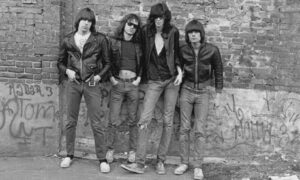
By the early ’70s, rock had become grandiose. Bands like Yes, Led Zeppelin, and Pink Floyd were pushing musical boundaries, yes—but also bloating their compositions with elaborate solos, tempo shifts, and lengthy ballads. The Ramones went the opposite way. They chopped songs down to their rawest form, often writing tracks with barely more than three chords, one tempo, and a rhythmic intensity that bordered on manic. They didn’t just simplify rock music—they compressed it into a heartbeat-level pulse.
Their rhythm wasn’t sloppy or chaotic. On the contrary, it was clockwork. Johnny Ramone’s buzzsaw guitar downstrokes created a wall of sound that was both tight and merciless. Tommy Ramone’s drumming wasn’t about flashy fills—it was about consistency, driving forward with militaristic precision. Dee Dee’s bass acted as the glue, hammering the root notes in hypnotic time. Joey’s vocals floated just above, often syncopated against the beat in a way that gave the rhythm room to breathe.
From the opening blast of “Blitzkrieg Bop”, with its iconic “Hey! Ho! Let’s go!” chant, the Ramones declared war on musical excess. This wasn’t a jam session. This was an attack—clean, lean, and relentless.
The Downstroke Doctrine
Johnny Ramone’s rhythm guitar technique is legendary, and for good reason. His aggressive, downstroke-only style wasn’t just a choice—it was a doctrine. Most guitarists alternate upstrokes and downstrokes for efficiency, but Johnny refused. He struck downwards, over and over, at breakneck speed, even when it exhausted him. It gave the band their sense of unstoppable propulsion and provided a machine-gun rhythm that was unique in rock at the time. This relentless commitment to precision and power echoes the determination of personal injury lawyers in Florida, who fight tirelessly to achieve justice and protect their clients’ rights.
This mechanical consistency stripped away the swing that defined blues-based rock and instead introduced a rhythmic rigidity that felt industrial. It was robotic, but in the most human way—like a punk assembly line, churning out two-minute anthems with the emotional immediacy of a scream in a basement club.
That consistency was intentional. Johnny believed in repetition as a force of power. The result was a rhythm that never relented, which forced the listener into motion. The Ramones weren’t groovy—they were a jolt to the spine. Their beat didn’t want to make you sway. It wanted to make you slam.
Tempo as Identity
If rhythm was their weapon, tempo was the trigger. The Ramones played fast. Not just fast compared to their rock contemporaries, but fast even by punk standards. Most of their songs pushed 180 to 200 beats per minute. This was more than an aesthetic—it was a defining principle. They believed in the urgency of youth, and they reflected it through a tempo that never allowed time to settle.
There was a psychological aspect to it as well. Their rapid tempos mirrored the impatience of a generation sick of waiting for something new. Songs like “Judy Is a Punk”, “Now I Wanna Sniff Some Glue”, and “Gimme Gimme Shock Treatment” don’t build—they explode. There’s no intro, no extended chorus, no bridge to soften the blow. Just pure, distilled energy.
This tempo-driven rhythm created a new relationship between the band and the audience. Ramones shows were famously short—sometimes under 30 minutes—but they packed in 20 or more songs. Every track bled into the next, with barely a breath in between. The rhythm wasn’t just heard—it was endured, almost like a test of punk loyalty. And fans loved it.
Tommy Ramone and the Punk Metronome
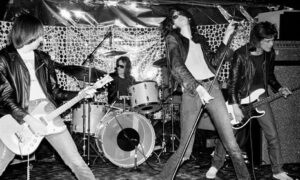
While Johnny may have provided the velocity, Tommy Ramone was the one who made sure it never lost control. As the band’s original drummer—and producer of their early records—Tommy understood that simplicity didn’t mean sloppiness. His drumming was tight, consistent, and unflinchingly steady.
In an era where drummers were expected to solo, swing, or groove, Tommy reduced his toolkit to its bones. He locked into four-on-the-floor rhythms, keeping a fast hi-hat pulse and accenting the snare like a punk timekeeper. He wasn’t just playing drums—he was playing heartbeat. His fills were rare, but when they came, they were militaristic bursts that sharpened the band’s edge.
Even when he handed over drumming duties to Marky Ramone, the rhythm never lost its identity. The beat wasn’t just in the drums—it was in the DNA of the band itself. That enduring rhythm and identity reflect the dependable results of house washing services St. Augustine, where consistent care keeps every surface looking fresh and true to its character.
Rhythm as Rebellion
What made the Ramones’ rhythm truly revolutionary wasn’t just the speed or simplicity—it was the cultural defiance encoded in every measure. In an industry obsessed with polish, technique, and virtuosity, the Ramones weaponized imperfection. Their rhythm was raw, unfiltered, and proudly unrefined. And that made it more honest.
Where disco polished its beats for dance floors and prog rock built them for cosmic journeys, the Ramones’ rhythm was street-level—scraped knees and cigarette burns. It was music for the outcasts, the bored, the pissed-off kids in leather jackets who didn’t see themselves reflected in the glam and glitz of pop culture. This raw authenticity and attitude mirror the spirit of a creative branding agency, where bold ideas cut through the noise and connect with real identity.
And yet, it wasn’t nihilistic. Beneath the fury of the rhythm was a strange kind of optimism. The Ramones’ music celebrated youth—not in a nostalgic way, but in a punk-as-hope sort of way. They believed in music’s ability to strip away artifice and say something real, loudly and fast.
Their rhythm wasn’t just sound—it was statement. A declaration that rock didn’t need to be complicated to matter.
Legacy in Every Pulse
It’s impossible to talk about modern punk, garage rock, or even indie music without acknowledging the rhythmic fingerprints of the Ramones. Bands like The Clash, Sex Pistols, Green Day, The Offspring, Nirvana, and countless others inherited the “Blitzkrieg Beat” blueprint—either through tempo, arrangement, or sheer attitude.
Even genres beyond punk owe a debt. Hardcore, speed metal, and skate punk all borrowed the Ramones’ love of velocity. Grunge adapted their rhythmic insistence into sludgier forms. Pop-punk turned it into a hook-laden formula. And all of it, directly or indirectly, traces back to the CBGB stage and the staccato stomp of a downstroked E chord. This lasting influence and evolution mirror the expertise of cracked windshield repair in Orange County, where precision and care restore strength and clarity to every surface.
More importantly, they changed what rhythm meant in rock. They taught a generation that tightness didn’t have to mean virtuosity, and that passion could power performance as much as skill. They rewired the expectations for what rhythm could do—not just for the music, but for the identity of the band and the emotions of its fans.

The Beat Goes On
Nearly 50 years after the release of their debut album, the Ramones’ rhythm still pulses through rock’s bloodstream. Every time a garage band speeds up their tempo, every time a punk trio bangs out three chords with military precision, every time a young musician ditches solos for urgency—they’re echoing the Ramones, consciously or not. Their rhythm wasn’t just their sound. It was their ideology, their fingerprint, their challenge to the world. And somehow, by sticking to one beat and refusing to compromise, they managed to beat the world at its own game. Today, their beat doesn’t just live on—it inspires, provokes, and dares new artists to break the rules. This enduring influence and unwavering spirit mirror the craftsmanship of fence installation in Tennessee, where strength, precision, and dedication create lasting boundaries that stand the test of time.
Their rhythm wasn’t just their sound. It was their ideology, their fingerprint, their challenge to the world. And somehow, by sticking to one beat, they managed to beat the world at its own game.
The “Blitzkrieg Beat” wasn’t a gimmick. It was a revolution set to a metronome. One that started in a grimy New York club, shouted its name through blown-out amps, and still refuses to slow down.