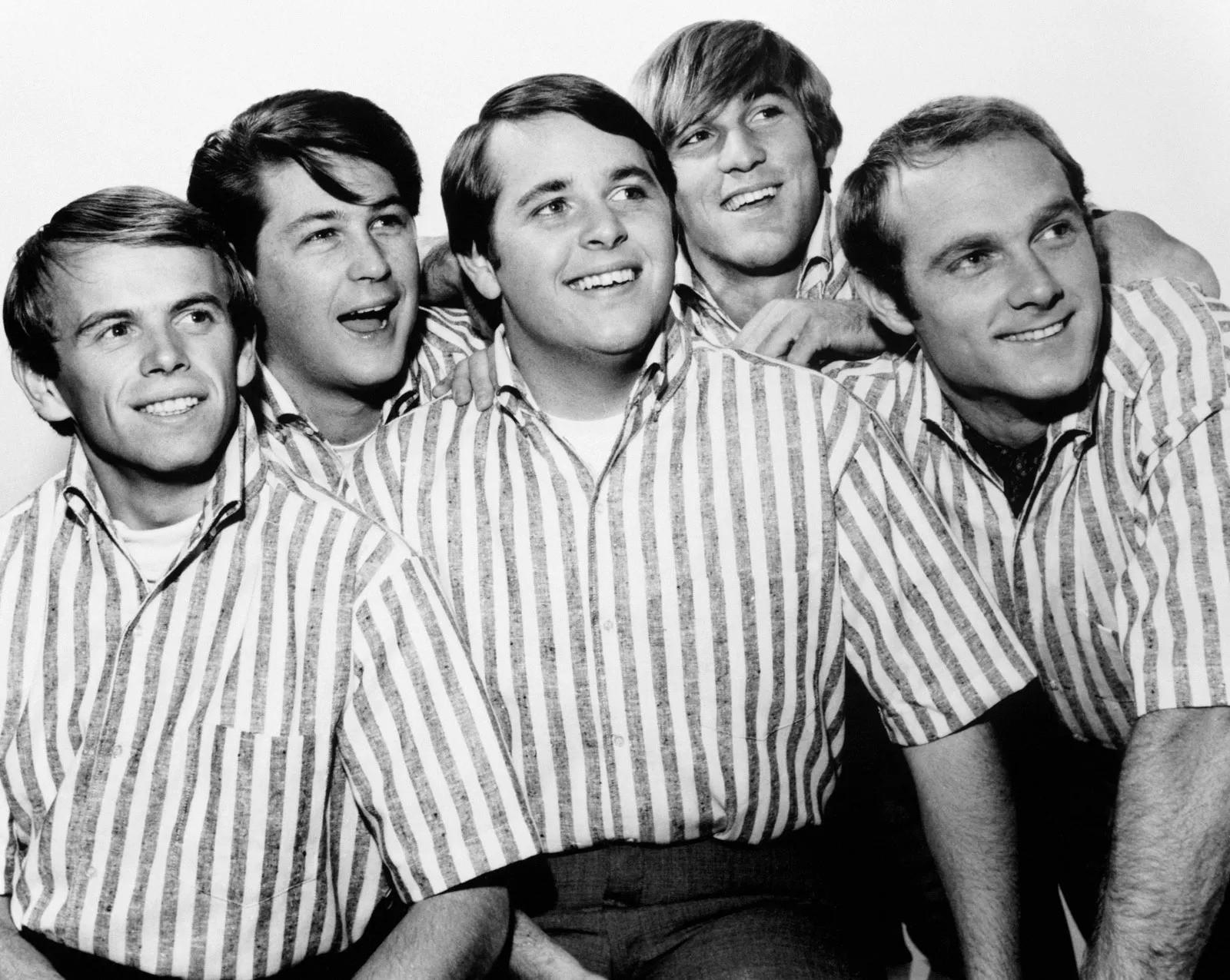
When most people think of The Beach Boys, the immediate images that come to mind are sun-bleached California beaches, surfboards slicing through the waves, and sun-soaked harmonies that evoke endless summer afternoons. But beneath the layer of idyllic imagery lies a band that fundamentally reshaped the rhythmic landscape of rock music. While The Beach Boys are often remembered for their lush vocal harmonies and evocative lyrical imagery, their rhythmic innovations played an equally crucial role in defining rock music during the 1960s and beyond.
![the-beach-boys-1964-billboard-1548.jpg [webp-to-jpg output image]](https://s5.ezgif.com/tmp/ezgif-505e3e20b036a8f6.jpg)
The Genesis of a Rhythmic Revolution
Emerging from Hawthorne, California, in the early 1960s, The Beach Boys were born into a cultural moment hungry for new musical expressions. Rock and roll had already been established by pioneers like Chuck Berry and Little Richard, but its rhythmic patterns were relatively straightforward, often emphasizing a driving backbeat and a predictable 4/4 time signature. The Beach Boys, led by the visionary Brian Wilson, began experimenting with rhythm in ways that challenged these norms. Their music captured the kinetic energy of youth, the rolling momentum of the surf, and a playful syncopation that was both danceable and sophisticated.
From their earliest singles, like “Surfin’ Safari” and “Surfin’ U.S.A.,” The Beach Boys demonstrated an instinct for groove that went beyond simple accompaniment. The percussive elements in their tracks often mimicked the natural rhythm of ocean waves, creating a flowing, undulating effect that was subtly hypnotic. Even within the constraints of early rock instrumentation, the band found ways to weave rhythmic complexity into seemingly simple pop structures. Their sound was immediately recognizable yet deceptively intricate, a signature that would define their career.
Syncopation as Signature
One of the most striking aspects of The Beach Boys’ rhythm is their use of syncopation. Syncopation, the deliberate displacement of expected beats, gave their music a sense of forward motion and unpredictability that was unusual in rock at the time. In songs like “Fun, Fun, Fun,” the off-beat accents of guitar and drum interplay create a sense of propulsion that mirrors the carefree chaos of teenage rebellion. This rhythmic tension and release, paired with the band’s trademark harmonies, produced a sound that was irresistibly dynamic.
Brian Wilson, often called the genius behind the band, approached rhythm with the same meticulous attention he gave to melody and harmony. He experimented with polyrhythms, layering percussion patterns that interlocked in surprising ways. Tracks like “God Only Knows” and “Wouldn’t It Be Nice” demonstrate a subtle but unmistakable rhythmic sophistication, blending rock sensibilities with jazz-inspired timing. The result is a sound that feels both spontaneous and meticulously crafted, a hallmark of The Beach Boys’ unique contribution to rock music.
The Role of Drums and Bass
While Brian Wilson’s studio experimentation often gets the spotlight, the foundation of The Beach Boys’ rhythm relied on the often-underappreciated work of their rhythm section. Drummer Dennis Wilson, Brian’s younger brother, brought a fluid, organic approach to the drum kit. Unlike the rigid backbeats common in early rock, Dennis favored a loose, rolling style that emphasized groove over strict timing. His drumming often mirrored the ebb and flow of the California surf, providing a naturalistic underpinning to the band’s songs.
The bass lines, whether performed by session musicians or Brian himself on certain recordings, further reinforced this rhythmic innovation. Rather than simply outlining chord progressions, the bass in Beach Boys’ tracks often acted as a melodic and rhythmic counterpoint, adding depth and motion to the music. This interplay between drums, bass, and layered percussion contributed to a sense of momentum that was uniquely theirs. It’s easy to overlook in casual listening, but the rhythmic architecture of their songs laid the groundwork for countless rock acts that followed.

The Influence of Studio Innovation
The Beach Boys’ approach to rhythm was inseparable from their embrace of studio technology. Brian Wilson treated the recording studio not just as a place to capture performance, but as an instrument itself. He layered multiple drum tracks, used unconventional percussion instruments, and even incorporated found sounds to create rhythmic textures that were unprecedented in popular rock music.
Pet Sounds, their landmark 1966 album, is a testament to this philosophy. Songs like “Sloop John B” and “Here Today” showcase intricate rhythmic patterns that intertwine with vocal harmonies, creating a sense of movement and urgency. The band’s use of tambourines, sleigh bells, bongos, and other percussive elements enriched the sonic palette, giving their music a complexity that few rock bands had attempted before. In doing so, The Beach Boys elevated rhythm from mere accompaniment to a central expressive force within rock music.
Their later work, including tracks from Smile and Smiley Smile, pushed these ideas even further. Brian Wilson’s layering of vocals with syncopated percussive elements created rhythmic counterpoints that challenged listeners to hear rock music in new ways. It was a subtle but profound transformation: rhythm became not only the engine of the song but also a narrative device, capable of conveying emotion, tension, and release.
The Dance Between Harmony and Rhythm
It’s impossible to talk about The Beach Boys’ rhythm without acknowledging how it interacts with their harmonies. The band’s vocal arrangements often operate in counterpoint with the instrumental rhythm, creating layers of tension and release. In “Don’t worry Baby,” for example, the syncopated piano, subtle percussion, and vocal phrasing work in concert to evoke emotional intensity. The interplay between rhythm and harmony became a hallmark of their style, influencing not only rock but also pop, soul, and later progressive music.
What sets The Beach Boys apart is how natural this complexity sounds. Unlike some progressive rock experiments that feel cerebral or artificial, The Beach Boys’ rhythmic ingenuity feels organic, an extension of their California roots and youthful energy. The syncopation, polyrhythms, and layered percussion never feel forced; they serve the song and enhance its emotional resonance. Even seemingly simple songs like “I Get Around” demonstrate a clever use of rhythmic shifts, tempo changes, and vocal phrasing that keeps listeners engaged while maintaining accessibility.
Rhythm as Cultural Expression
The Beach Boys’ rhythmic style was not just a technical innovation; it was a reflection of cultural identity. The flowing, sun-drenched grooves mirrored the movement of California surf culture, evoking a sense of freedom, adventure, and carefreeness. The rhythms captured the feeling of summer, youth, and the endless horizon, making the music deeply relatable and emotionally charged. In doing so, The Beach Boys redefined what rock music could represent, merging rhythmic sophistication with cultural storytelling.
Their influence extended to other genres as well. The emphasis on layered percussion and syncopation found echoes in soul, funk, and even jazz-influenced pop. By integrating complex rhythmic ideas into commercially appealing songs, The Beach Boys bridged the gap between artistry and mass appeal, setting a precedent for future generations of musicians.
Legacy and Influence
The rhythmic innovations of The Beach Boys resonated far beyond surf culture. Bands like The Beatles, The Rolling Stones, and later acts such as Fleetwood Mac and Queen drew inspiration from the way The Beach Boys treated rhythm as a vehicle for emotion and movement. Brian Wilson’s studio experiments influenced countless producers, from Phil Spector’s “Wall of Sound” to modern pop and indie rock production.
Even today, contemporary rock and pop artists continue to explore rhythmic textures that owe a debt to The Beach Boys. Their work demonstrated that rock music could be both catchy and sophisticated, that rhythm could be playful yet precise, and that the studio could be a laboratory for innovation. In many ways, they expanded the definition of what rock music could achieve rhythmically.
:max_bytes(150000):strip_icc():focal(684x241:686x243)/Beach-Boys-trailer-040824-3-3765ea62c4ec4edfad0399d57dc3991d.jpg)
Surf, Sound, and Syncopation as a Blueprint
The story of The Beach Boys is often told in terms of their cultural impact—surf culture, youth rebellion, and the California mythos. Yet, it is their rhythmic legacy that solidifies their place as innovators in rock music. By blending syncopation, polyrhythms, and studio experimentation, they created a sound that was both familiar and revolutionary.
Their music remains a blueprint for musicians who seek to marry technical sophistication with emotional authenticity. The waves of their rhythm, like the surf they idolized, continue to ripple through rock music, reminding us that innovation often emerges from playful curiosity, meticulous craft, and a willingness to follow the music wherever it leads.
In celebrating The Beach Boys as a rock band, it becomes clear that their genius was not only in crafting unforgettable melodies and harmonies but in redefining rhythm itself within the rock idiom. Surf, sound, and syncopation were not just aesthetic choices—they were revolutionary tools that reshaped the heartbeat of popular music. Their rhythmic innovations continue to inspire, proving that even in the sunniest, most carefree music, profound artistry can thrive.