
When Radiohead released their debut single “Creep” in 1992, the world had little idea that they were witnessing the beginning of a band that would not just traverse rock genres but fundamentally challenge the boundaries of what rock music could be. The early 90s were dominated by grunge, Britpop, and the residual echoes of 80s rock, yet Radiohead emerged with a sound that was both familiar and disconcertingly unique. “Creep” was raw, confessional, and unmistakably alternative, introducing audiences to Thom Yorke’s haunting voice and the band’s ability to evoke both empathy and alienation with a single chord progression. While the song initially landed them in the alternative rock category, it would be only the first step of a journey that would see the band continually redefine themselves.
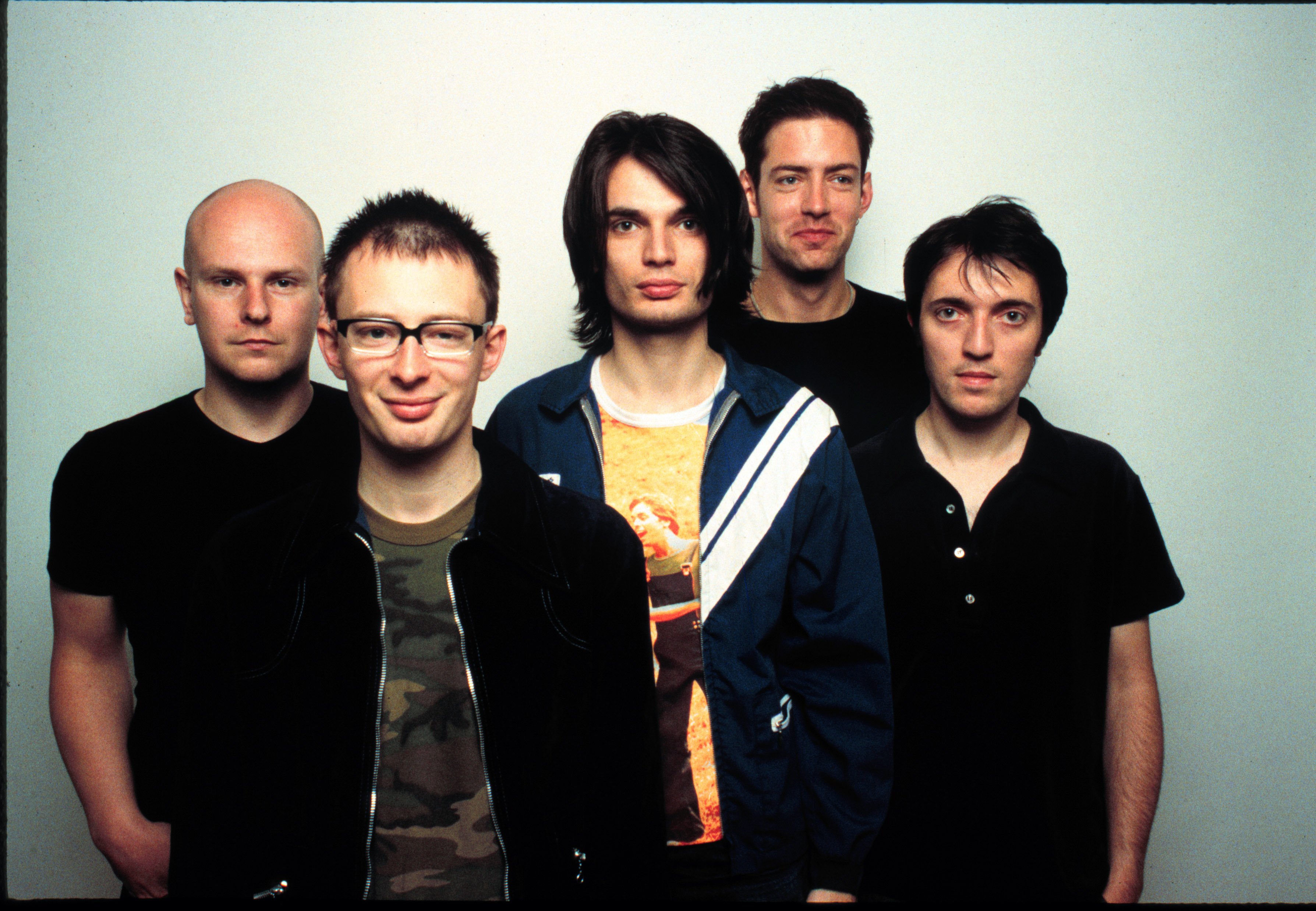
The Alternative Rock Era: Pablo Honey and The Bends
Radiohead’s first album, Pablo Honey, carried the weight of the “Creep” phenomenon. While the album as a whole leaned heavily on traditional alternative rock structures, it hinted at the experimentation that would define their later work. Songs like “Anyone Can Play Guitar” and “Stop Whispering” showcased a band comfortable with melancholy, distorted guitars, and introspective lyricism. Yet even within this framework, there was a subtle tension—a willingness to step outside the formula that would later explode in albums like OK Computer.
It was with their second album, The Bends, that Radiohead began to stretch the confines of rock. The band’s sound grew more layered and sophisticated, incorporating complex guitar textures and more intricate arrangements. Tracks like “Fake Plastic Trees” and “Just” reflected a maturity in songwriting, blending the emotional intensity of alternative rock with a melodic sensibility that hinted at Britpop influences while remaining distinctly Radiohead. The Bends was still recognizable within the rock landscape, yet it was clear the band was already pushing toward something greater, something more transformative.
The Conceptual Leap: OK Computer and the Expansion of Rock
OK Computer, released in 1997, marked a pivotal moment not just for Radiohead but for rock music as a whole. The album’s sprawling sonic landscapes and socially conscious lyrics redefined what a rock album could communicate. The band’s use of unconventional song structures, atmospheric production, and electronic textures created a sound that felt both futuristic and deeply human. “Paranoid Android” exemplified this evolution—three distinct movements within a single song, blending progressive rock influences with alternative sensibilities. Meanwhile, tracks like “No Surprises” and “Karma Police” demonstrated that Radiohead could balance experimental ambition with melodic accessibility.
This period also saw the band engaging with the anxieties of the modern world, from technology to isolation, giving their rock music a cerebral dimension rarely seen in mainstream arenas. Radiohead was no longer just a band within a genre; they were architects of a new musical language, one that expanded the emotional and structural possibilities of rock.

Kid A and Amnesiac: Breaking from Convention
By the turn of the millennium, Radiohead had taken a radical detour. Kid A and its companion album, Amnesiac, abandoned conventional rock instrumentation almost entirely in favor of electronic experimentation, ambient soundscapes, and jazz-inflected rhythms. Guitar riffs became sparse, replaced by synths, glitchy textures, and Thom Yorke’s manipulated vocals. Tracks like “Everything In Its Right Place” and “Idioteque” pushed the boundaries of rock to the point where traditional genre labels felt inadequate.
Despite—or perhaps because of—this bold move, the albums were still deeply rooted in emotional intensity. Radiohead demonstrated that rock could be more than distorted guitars and verse-chorus-verse formulas; it could be abstract, cinematic, and intellectually challenging while remaining emotionally resonant. The band’s fearless genre-bending at this stage cemented their reputation as innovators, challenging both fans and critics to rethink the essence of rock music.
Hail to the Thief and a Return to Guitar-Driven Sounds
With Hail to the Thief in 2003, Radiohead began synthesizing their experimental phase with a return to more conventional rock elements. Songs like “There There” and “2 + 2 = 5” reintroduced guitar-driven energy and rhythmic propulsion while maintaining the electronic textures and complex song structures developed in Kid A and Amnesiac. The result was a hybrid sound that blurred the line between alternative rock, art rock, and electronic experimentation.
Lyrically, Hail to the Thief reflected a band increasingly engaged with political and social commentary, using rock as a vessel for critique and reflection. The album showcased the band’s ability to traverse moods and tones—from aggression to melancholy—while maintaining a cohesive musical identity, a balancing act that few rock bands attempt, let alone succeed at.
In Rainbows: Intimacy and Innovation
By 2007, Radiohead released In Rainbows, an album that combined the experimental textures of their previous work with a newfound intimacy and warmth. The melodies were lush yet understated, with tracks like “Nude” and “Reckoner” revealing a band that had mastered subtlety without sacrificing emotional impact. The guitar work was nuanced rather than abrasive, the electronic elements were seamlessly integrated, and the overall effect was both accessible and sophisticated.
In Rainbows also demonstrated the band’s innovative approach to the music industry itself, with its pay-what-you-want release model disrupting traditional distribution. This innovation mirrored their musical ethos: Radiohead had always been about challenging norms, whether sonic, structural, or commercial, and by this point, they had become both pioneers and respected elders within the rock world.
The Sonic Maturity of The King of Limbs
The King of Limbs, released in 2011, further showcased Radiohead’s evolution by leaning heavily into rhythm and texture. Tracks like “Lotus Flower” and “Bloom” emphasized looping patterns, intricate percussion, and atmospheric layering over traditional rock riffs. The band’s sound here was more abstract than ever, yet still undeniably rooted in rock sensibilities, proving that the genre could accommodate both subtle electronic manipulation and complex rhythmic experimentation.
This period also emphasized mood over conventional song structure, reflecting a band confident in its ability to communicate emotion without relying on predictable formulas. The King of Limbs was a testament to Radiohead’s ongoing commitment to redefining rock on their own terms, blending innovation with emotional resonance.

A Moon Shaped Pool: Culmination and Reflection
By the time A Moon Shaped Pool arrived in 2016, Radiohead had fully mastered the art of synthesis—melding electronic experimentation, orchestral arrangements, and traditional rock elements into a seamless whole. The album’s lush string arrangements, delicate piano, and textured soundscapes created an intimate yet expansive atmosphere. Songs like “Burn the Witch” and “Daydreaming” showcased the band’s ability to evoke complex emotional landscapes, blending melancholy, beauty, and tension in ways that few contemporary rock bands could achieve.
This album also reflected a band at peace with its legacy. While they had continuously pushed genre boundaries, A Moon Shaped Pool demonstrated that Radiohead could create deeply affecting rock music without the need for shock or radical reinvention. It was a culmination of decades of experimentation—a quiet but profound statement on what rock music could express in the 21st century.
Radiohead’s Legacy Across Rock Genres
Radiohead’s journey from Creep to A Moon Shaped Pool is a testament to their refusal to be confined by genre labels. They began in the realm of alternative rock, expanded into art rock and electronic experimentation, and continually redefined themselves with each album. Their willingness to embrace risk, challenge conventions, and explore new sonic territories has influenced countless artists across multiple genres, from indie rock to electronic music.
What makes Radiohead’s journey particularly compelling is not just their technical innovation but their emotional intelligence. Whether delivering a visceral scream in “Creep,” a sprawling multi-movement epic in “Paranoid Android,” or the fragile beauty of “True Love Waits,” the band has always communicated the spectrum of human emotion with honesty and nuance. They have proven that rock music is not a static category but a living, evolving medium capable of encompassing complexity, experimentation, and profound emotional resonance.
Conclusion
From the raw angst of Creep to the sophisticated textures of A Moon Shaped Pool, Radiohead’s evolution through rock genres is a remarkable story of artistic courage and innovation. They have continually pushed the boundaries of what rock music can be, blending traditional instrumentation with electronic experimentation, challenging lyrical conventions, and embracing emotional depth. In doing so, Radiohead has not only redefined their own identity but also expanded the possibilities of rock music itself, leaving a legacy that will inspire generations of musicians and listeners to come.