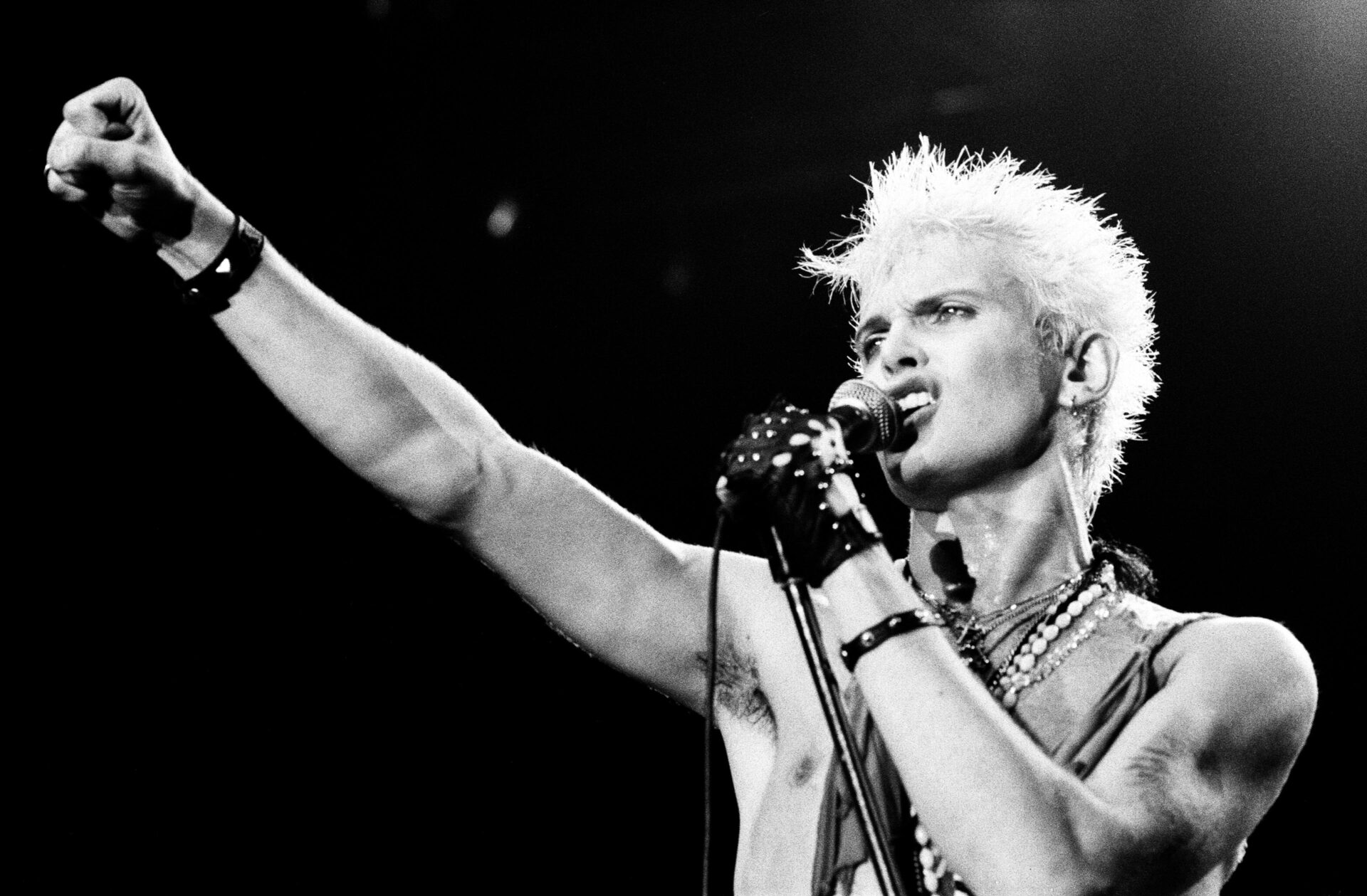
When the 1980s rolled in, rock music was in a state of flux. Punk had shaken the foundations of the industry, disco had temporarily dominated the airwaves, and MTV was transforming the way audiences experienced music. Into this chaotic yet fertile landscape stepped Billy Idol, a figure who would not only define a generation but also reshape the very essence of rock music. Known for his spiky platinum hair, sneering vocals, and relentless stage energy, Idol was more than a pop icon—he was a rhythmic force who married punk’s raw power with a melody-driven, danceable sensibility that made rock irresistible to a wider audience.
Idol’s early years in Generation X laid the foundation for his rhythmic style. Punk’s fast tempos, aggressive riffs, and confrontational attitude were all integral to his musical DNA. When he transitioned to a solo career in the early 1980s, he carried this energy forward but layered it with a sense of rhythm that transcended punk’s often chaotic feel. Songs like “White Wedding” and “Rebel Yell” demonstrated an uncanny ability to blend pounding beats with hooks that lodged themselves in listeners’ minds. His music wasn’t just aggressive; it had a swing, a push and pull that made it impossible not to move to the rhythm. In many ways, Billy Idol transformed punk aggression into a danceable, stadium-ready rock energy.

Crafting the Sound of the 80s
Billy Idol’s redefinition of rock music wasn’t only about image or attitude—it was about rhythm. The 1980s were a decade obsessed with sonic experimentation. Synthesizers, drum machines, and studio effects were beginning to dominate the charts, and many traditional rock artists struggled to adapt. Idol, however, approached rhythm with a meticulous understanding of what made a song resonate physically with listeners. His work with guitarist Steve Stevens was particularly crucial. Stevens’ virtuoso riffs didn’t just punctuate songs—they drove them forward. Tracks like “Eyes Without a Face” exemplify this perfectly. Stevens’ delicate yet precise guitar work paired with Idol’s vocal timing created a sense of dynamic tension, a rhythm that was both hypnotic and forceful.
Idol’s vocal delivery contributed to his rhythmic mastery. His sneer wasn’t just an affectation; it was a percussive instrument. The way he spat syllables, elongated certain notes, and punctuated phrases acted like an additional drum, giving each track a layered sense of momentum. His phrasing often contradicted the drumbeat in a playful, syncopated way, creating tension that kept listeners on edge. Unlike many contemporaries whose vocals were smooth or melodic in the conventional sense, Idol’s voice demanded attention—it was unpredictable, raw, and fully integrated with the song’s underlying rhythm.
MTV and the Visual Beat
One cannot discuss Billy Idol’s impact without acknowledging the role of MTV. His videos were not just promotional tools—they were extensions of his rhythmic sensibility. On screen, Idol moved with the beat in a way that mirrored his music. The stomping, swaggering, and sudden lunges became visual signatures that accentuated the songs’ underlying pulses. Videos like “Rebel Yell” and “Dancing With Myself” turned his live energy into a visual rhythm, reinforcing his identity as a rock musician whose power came as much from physicality as sound. MTV didn’t just broadcast his songs; it amplified his unique understanding of rhythm, making viewers feel the music in both ears and eyes.
This integration of sound and movement was revolutionary in the 1980s. While many rock acts relied solely on instrumentation or lyrical storytelling, Idol understood that rhythm could be experienced physically. Audiences didn’t just listen—they moved, jumped, and danced, translating his studio work into a kinetic communal experience. In doing so, he bridged the gap between punk’s underground immediacy and mainstream stadium rock, demonstrating that rhythm could be both rebellious and accessible.
Rebellion Through Rhythm
At its core, Billy Idol’s music was a rebellion against stagnation. The 1980s had its share of polished, formulaic rock, but Idol’s songs were infused with a sense of unpredictability that made them alive. The rhythmic structures in tracks like “Flesh for Fantasy” or “Mony Mony” were deceptively simple on the surface, yet they contained subtle syncopations and accents that kept listeners engaged. The groove was undeniable, but it never felt manufactured—it had the rough edges of punk, the swagger of rock, and a pulse that compelled movement. This fusion of rebellion and rhythm became his signature, defining not only his music but also the decade’s perception of what rock could be.
His live performances further amplified this rhythmic rebellion. Unlike some rock stars who relied on technical perfection, Idol thrived on spontaneity. His live shows were structured chaos—a tight rhythmic backbone supporting unpredictable bursts of energy. Drummers and guitarists had to anticipate his vocal timing, improvisational flourishes, and sudden changes in tempo. The audience became part of the rhythm, clapping, stomping, and singing along in sync with his pulses. In this sense, Billy Idol didn’t just perform rock music; he orchestrated rhythm on a massive, communal scale, turning concerts into visceral experiences that went beyond mere entertainment.
Influencing the Next Generation
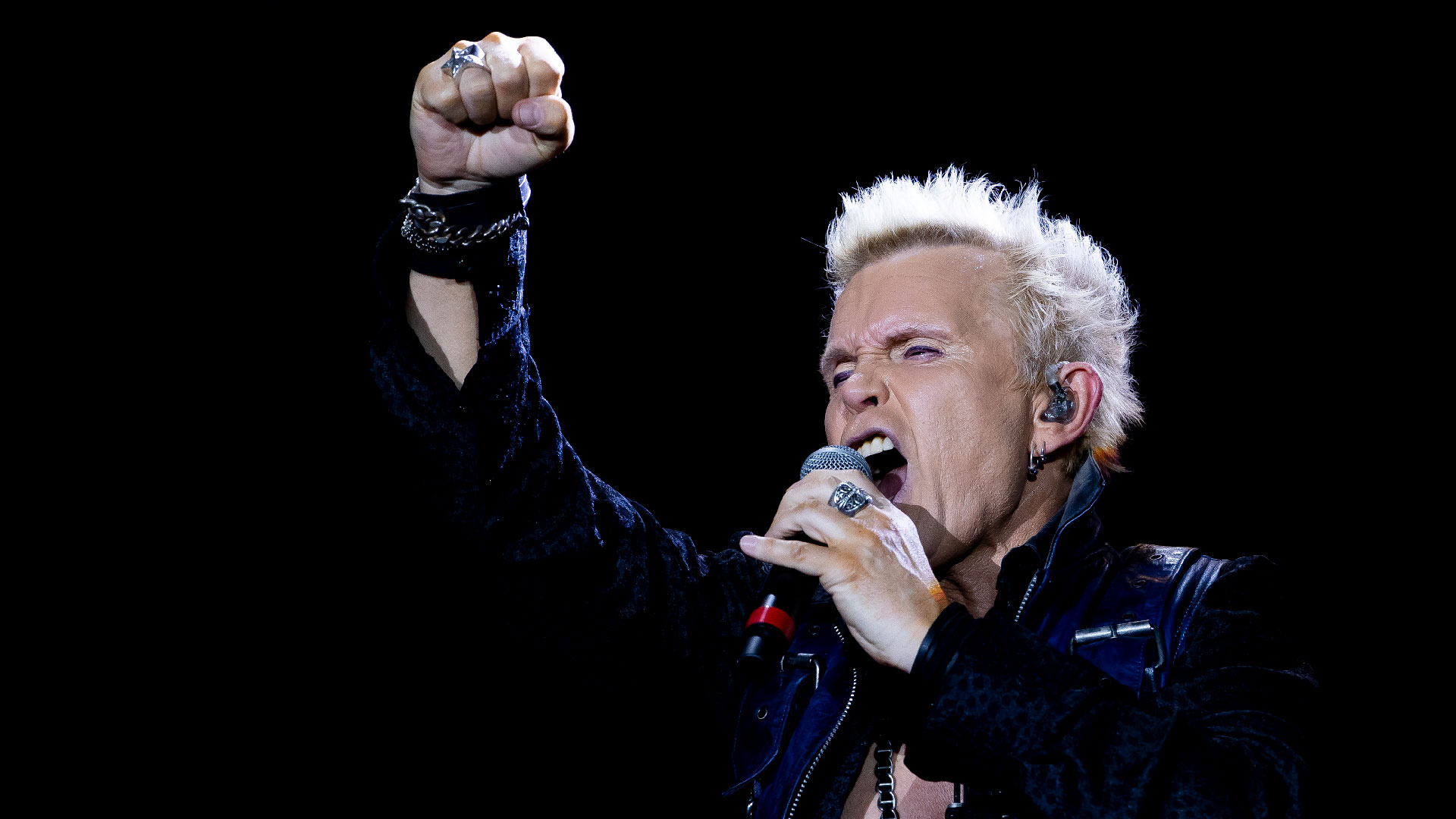
The impact of Billy Idol’s rhythmic innovation extended far beyond his own career. Throughout the 1980s and into the 1990s, countless rock and pop-rock artists drew inspiration from his approach. Guitarists began experimenting with syncopation and interplay between riffs and vocal phrasing, while singers incorporated more percussive articulation into their deliveries. Even pop acts borrowed from his visual and rhythmic sensibility, demonstrating the pervasive influence of his style.
Idol’s fusion of punk energy and rhythmic accessibility also played a key role in shaping the sound of arena rock and crossover hits. By blending aggressive beats with melodic hooks, he proved that rock could maintain its edge while appealing to mainstream audiences. This duality became a blueprint for bands like Bon Jovi, Def Leppard, and later, alternative rock acts who sought to balance rebellion with mass appeal. In many ways, Billy Idol became the bridge between punk’s underground credibility and rock’s commercial viability, with rhythm serving as the critical vehicle.
Enduring Legacy
Decades later, the signature rhythm and swagger of Billy Idol’s music remain influential. Modern artists across genres reference his phrasing, his interplay with guitar, and his ability to turn a song into a kinetic experience. His hits still dominate playlists, not just because they are catchy, but because they make the body respond instinctively to the beat. There’s a physicality to his music that remains timeless—a quality often overlooked when discussing lyrical themes or production techniques, but essential to his enduring appeal.
Moreover, Idol’s rhythmic experimentation demonstrated that rock music could evolve without losing its core identity. By emphasizing timing, interplay, and physical energy, he expanded the vocabulary of rock, showing that rebellion could coexist with accessibility. This combination of attitude, technique, and rhythmic intelligence ensured that Billy Idol didn’t just ride the wave of 1980s rock—he helped define it.

Conclusion
Billy Idol’s contribution to rock music in the 1980s cannot be overstated. He was more than a charismatic frontman or a visual icon; he was a master of rhythm, crafting songs that demanded movement, attention, and emotional engagement. His blend of punk aggression, melodic sensibility, and kinetic energy redefined what it meant to be a rock musician. From his meticulous studio work with Steve Stevens to his explosive live performances and MTV-defining videos, Idol consistently demonstrated that rhythm could be both rebellious and irresistible.
In the larger narrative of rock music, Billy Idol stands as a figure who bridged eras, styles, and audiences. He transformed punk’s raw immediacy into a danceable, stadium-ready sound, proving that rebellion and rhythm could coexist seamlessly. His music resonates not only because of its catchy hooks or iconic image but because of the way it makes listeners feel—physically, emotionally, and culturally. Billy Idol didn’t just contribute to the 1980s rock scene; he redefined it, leaving a legacy that continues to influence musicians and thrill audiences decades later.