Feel the Pulse—How Rhythm Shapes Our World

January 2, 2026 | Glenda Burns

The Heartbeat of Fleetwood Mac: How Rhythm Defines Their Rock Legacy

Fleetwood Mac is more than a band; they are a musical institution, a storybook of human emotion set to melody, and a rhythm-driven powerhouse that has defined rock music for decades. From their early blues roots to the polished, almost cinematic sound of Rumours, the band’s rhythm has always been the hidden engine propelling their music forward. While their vocal harmonies, evocative lyrics, and iconic guitar lines often capture the spotlight, it is the rhythmic heartbeat—the meticulous interplay between drums, bass, and percussion—that truly cements Fleetwood Mac’s legacy in rock history.

Fleetwood Mac: Happy at the Top

Rhythm as the Foundation of Fleetwood Mac’s Sound

At its core, rhythm is what keeps music alive. It gives songs structure, drives emotion, and creates a connection between the listener and the artist. In Fleetwood Mac’s case, rhythm is not just a supportive element; it is central to their identity. Mick Fleetwood’s drumming is legendary for its subtle power and fluidity, blending rock’s assertive energy with a jazz-influenced sense of timing. Meanwhile, John McVie’s bass lines do more than support—they converse with the drums, weaving intricate patterns that anchor the songs while allowing melodic freedom for Lindsey Buckingham’s guitar and Stevie Nicks’ vocals.

Take The Chain from Rumours, for example. Its instantly recognizable bassline begins with a tension-filled rhythm that slowly escalates into a full-blown rock crescendo. The song’s power is not just in its lyrics about heartbreak and betrayal, but in the way rhythm communicates the emotional stakes before a single word is sung. The bass and drums lock in a pulse that makes listeners almost feel the inevitability of the story unraveling—a musical heartbeat syncing with the emotional pulse of the narrative.

Syncopation and Subtlety: Fleetwood Mac’s Rhythmic Signature

Fleetwood Mac’s genius lies not only in what they play but how they play between the beats. Many of their songs employ syncopation—a deliberate shift in expected rhythmic patterns—that adds tension and intrigue. In Dreams, the groove is deceptively simple, almost hypnotic, yet it carries a subtle push-and-pull that mirrors the song’s themes of love and uncertainty. Mick Fleetwood’s drumming, restrained yet precise, provides a floating sense of movement, while John McVie’s bass grounds the track, giving it warmth and weight. It’s a masterclass in restraint: the rhythm never overshadows the vocals or melody, but it always guides them.

This interplay of subtlety and drive can also be heard in Go Your Own Way. Lindsey Buckingham’s guitar riffs slice through the rhythmic foundation with percussive precision, creating a sense of urgency that mirrors the emotional intensity of the lyrics. The song’s rhythm section doesn’t merely accompany; it propels the listener forward, creating momentum that mirrors the narrative of breaking away and moving on.

Emotional Storytelling Through Rhythm

One of Fleetwood Mac’s most remarkable achievements is their ability to use rhythm to convey emotion. Rhythm can make listeners tap their feet, yes, but in Fleetwood Mac’s hands, it also becomes a tool for storytelling. In Rhiannon, the syncopated drum beats and flowing bass lines create a sense of mystique and tension that perfectly complements Stevie Nicks’ ethereal vocals. The rhythm here is not just background—it is part of the narrative, a sonic representation of Rhiannon’s otherworldly energy.

Similarly, Gypsy from the album Mirage demonstrates how rhythm can evoke nostalgia and longing. The song’s percussive elements are soft yet insistent, giving the listener a sense of time passing and memories lingering. In every beat, Fleetwood Mac manages to convey a feeling that words alone cannot capture, proving that rhythm in their music is inherently emotional and communicative, not just structural.
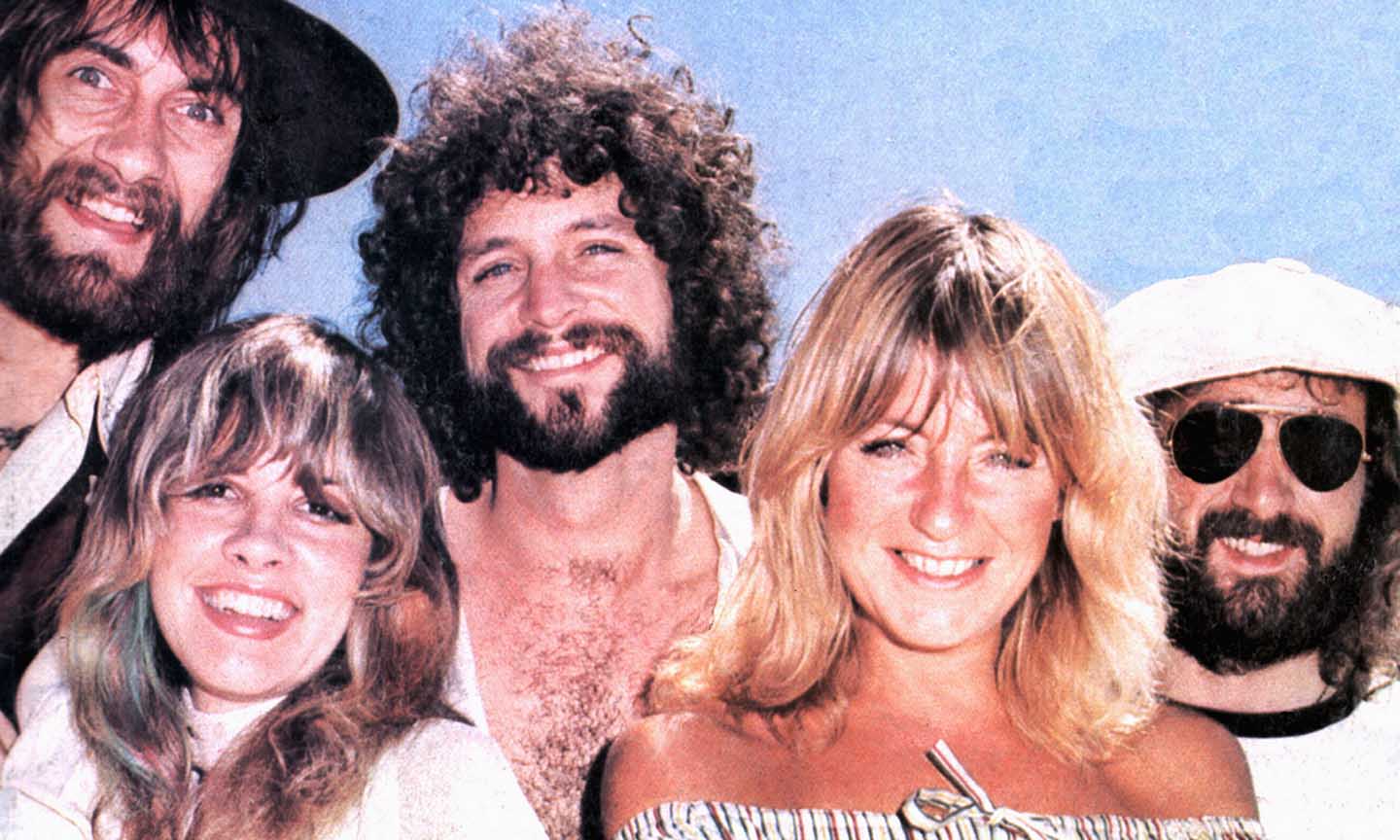
Fleetwood Mac - One Of The Biggest-Selling Pop Groups Ever

The Dynamic Between Drums and Bass

At the heart of Fleetwood Mac’s rhythm lies the synergy between Mick Fleetwood and John McVie. Few rhythm sections in rock history are as iconic or as complementary. Fleetwood’s drumming is simultaneously bold and nuanced, capable of thunderous crescendos or delicate, whispering taps that barely disturb the air. McVie’s bass is equally versatile, providing melodic counterpoints and rhythmic stability that turn songs into immersive experiences.

In tracks like Silver Springs, the bass and drums mirror the tension in the lyrics, creating a rhythm that feels almost conversational. You can hear the back-and-forth dynamic in the way the drum beats anticipate the bass movements, while the bass lines often hint at a release that the drums later fulfill. This push-and-pull is not accidental—it is the result of decades of intuitive collaboration, making Fleetwood Mac’s rhythm section a study in musical empathy.

The Role of Percussion in Creating Texture

While drums and bass form the foundation, Fleetwood Mac often employs additional percussion to create texture and depth. From tambourines to shakers and hand drums, these elements add layers that enhance the emotional resonance of the music. In Big Love, Lindsey Buckingham’s intricate guitar picking is complemented by subtle percussive accents, creating a complex rhythmic tapestry that keeps the listener engaged without ever feeling cluttered.

The rhythm in Fleetwood Mac’s songs is never static; it breathes, swells, and contracts. This sense of movement makes their music feel alive. It’s a quality that separates them from bands that rely solely on melody or lyrics—the heartbeat of Fleetwood Mac is felt in every groove, every percussive nuance, and every subtle swing.

Live Performance and Rhythmic Energy

Fleetwood Mac’s mastery of rhythm is especially evident in their live performances. On stage, the band transforms the studio precision into dynamic, visceral experiences. Mick Fleetwood’s drumming becomes a visual spectacle as well as an auditory one, his presence anchoring the performance while also interacting with the other musicians. John McVie’s bass lines drive the crowd’s energy, making even slower ballads feel emotionally kinetic.

Songs like Tusk showcase this live rhythmic intensity perfectly. The marching-band-style percussion, combined with the band’s rock instrumentation, creates a layered, almost hypnotic rhythm that grabs the audience and refuses to let go. Live, the heartbeat of Fleetwood Mac becomes tangible—it’s something you can feel in your chest, a testament to how integral rhythm is to their identity as a rock band.

Rhythm as a Unifying Force Across Eras

Fleetwood Mac’s rhythm has also been a unifying force throughout their changing lineup and musical evolution. From the Peter Green blues era to the Buckingham/Nicks pop-rock period, rhythm remained the connective tissue. Even as their sound shifted—from bluesy improvisation to polished, radio-friendly rock—the band maintained a distinct rhythmic identity that fans instantly recognize.

In later albums like Say You Will, rhythm continues to drive the music, proving that even decades into their career, Fleetwood Mac’s heartbeat remains as vital as ever. The rhythmic choices in these songs reflect both continuity and adaptation, blending classic techniques with contemporary influences without losing the essence of what makes Fleetwood Mac uniquely compelling.

Fleetwood Mac: Where Are They Now?

Conclusion: The Invisible Force That Defines a Legacy

While Fleetwood Mac’s melodies, lyrics, and harmonies have rightly earned them a place in rock history, it is the rhythm that binds everything together. Rhythm in their music is not just a backdrop; it is a storyteller, an emotional guide, and a unifying pulse that carries the listener through heartbreak, joy, mystery, and nostalgia. From the understated groove of Dreams to the driving intensity of Go Your Own Way, every song is propelled by a rhythmic intelligence that is both technical and profoundly human.

Ultimately, the heartbeat of Fleetwood Mac is more than a musical technique—it is a testament to the power of rhythm to define a band’s identity and shape the emotional landscape of rock music itself. Their legacy is a rhythmical journey that continues to inspire, captivate, and move listeners around the world. And for anyone who has ever felt a song pulse through them, that is the true measure of Fleetwood Mac’s genius: a rhythm that is alive, unyielding, and unforgettable.
December 30, 2025 | Glenda Burns

Why Certain Guitar Riffs Outlived the Bands That Created Them

Some guitar riffs seem to escape time. They survive lineup changes, genre shifts, and even the fading of the bands that first brought them into the world. You might not remember the album, the year, or even the name of the musicians who wrote them, but the moment those notes ring out, recognition hits instantly. These riffs have become cultural artifacts, detached from their original creators and embedded in collective memory. They are hummed by people who don’t play guitar, referenced in movies and commercials, and passed down to new generations of musicians as sacred exercises.

This phenomenon is not accidental, nor is it purely about technical brilliance. Plenty of skilled bands wrote complex, impressive guitar parts that vanished along with their careers. The riffs that endure do something different. They communicate immediately. They create a mood, an attitude, or a physical response within seconds. They are musical symbols, not just sequences of notes, and symbols have a way of outlasting their origins.

The survival of a riff often tells a story about timing, technology, cultural context, and human psychology. A band might fail due to poor management, bad luck, or changing tastes, yet one riff slips through the cracks and keeps living. It becomes bigger than the people who wrote it, reshaped by covers, memes, and reinterpretations. In some cases, the riff even overshadows the rest of the band’s catalog, turning the musicians into footnotes in the history of their own creation.

Understanding why this happens means looking beyond rock mythology and into how listeners process sound, how culture recycles ideas, and how simplicity can be more powerful than virtuosity. The riffs that outlive their bands reveal how music becomes memory, and how memory decides what deserves to survive.

Simplicity, Repetition, and the Hook That Refuses to Leave

At the core of nearly every immortal guitar riff is a deceptive simplicity. These riffs are rarely the most complex or technically demanding parts ever written. Instead, they rely on clear patterns, strong rhythmic identity, and repetition that borders on hypnotic. The human brain is wired to latch onto repetition, especially when it is paired with a satisfying groove or tonal tension. A riff that can be recognized within two or three notes has an enormous advantage in cultural survival.

Simplicity makes a riff portable. It can be played on an acoustic guitar, an electric guitar, a keyboard, or even tapped out on a table. This adaptability allows it to escape the original recording and enter everyday life. When a riff is simple enough to be taught quickly, it spreads faster among beginner musicians, many of whom may never explore the band’s deeper catalog. The riff becomes a gateway, but not always a doorway people walk fully through.

Repetition reinforces memory. A riff that cycles throughout a song rather than appearing briefly has more time to imprint itself. Even listeners who aren’t paying close attention absorb it subconsciously. Over time, the riff becomes the song in people’s minds, eclipsing lyrics, solos, and even the band’s identity. This is especially true in eras dominated by radio, where repeated exposure amplified the effect.

There is also an emotional economy at play. A great riff often captures a single, clear emotional stance: menace, swagger, joy, rebellion, or melancholy. It doesn’t ask the listener to interpret; it declares. That clarity allows it to function almost like a slogan. Bands that fail to sustain careers may lack cohesion, vision, or adaptability, but one perfectly distilled emotional moment can still endure.

Ironically, bands sometimes suffer because their defining riff sets expectations they can’t consistently meet. Audiences chase that one feeling, that one sound, and everything else feels like an approximation. The riff survives because it delivered exactly what it promised, while the band fades because it couldn’t replicate that lightning in a bottle.

Technology, Media, and the Riff as a Cultural Shortcut

The longevity of certain guitar riffs is inseparable from the technologies and media environments that carried them forward. Recording quality, radio formatting, film placement, and later digital sharing all play crucial roles in determining what sticks. A riff that thrives in isolation has a better chance of surviving than one that depends on context.

Early recording limitations actually helped riffs stand out. Analog distortion, tape saturation, and mono mixes forced guitar parts to be bold and direct. Subtlety often disappeared in translation, while strong midrange riffs cut through speakers and noise. This technical filtering favored riffs with clear identity, ensuring they translated well across radios, jukeboxes, and later televisions.

Film and advertising amplified this effect. A riff placed under a dramatic scene or used as shorthand for rebellion, danger, or coolness can gain a second life entirely detached from the band. Over time, audiences associate the riff with a feeling or image rather than its origin. The riff becomes a cultural shortcut, capable of summoning meaning instantly.

In the digital age, this detachment has accelerated. Short clips, memes, and algorithm-driven discovery reward instantly recognizable sounds. A riff that can hook someone within seconds thrives in these environments. Meanwhile, full albums and band narratives struggle for attention. The riff is optimized for survival in a fragmented media landscape, while the band’s broader work is not.

Covers and reinterpretations further abstract riffs from their creators. When a riff is played by dozens of artists across genres, its identity shifts from ownership to tradition. Younger listeners may encounter the riff through a cover, a video game, or a social media clip, never realizing it came from a band that struggled or disappeared decades ago. The riff no longer belongs to history; it belongs to circulation.

Technology doesn’t just preserve riffs; it selects them. Those that compress well, loop cleanly, and communicate instantly are the ones that endure. Bands that relied on atmosphere, long-form development, or subtle dynamics were often lost in translation, while a single, sharp riff survived the transition from vinyl to streaming almost effortlessly.

Myth, Identity, and the Riff as a Stand-In for a Band

Over time, enduring guitar riffs begin to function as myths. They stand in for entire eras, scenes, or attitudes, even when the bands themselves fade from memory. The riff becomes a symbolic identity, representing something larger than the musicians who wrote it. This symbolic power allows it to persist independently.

Listeners often construct simplified narratives around music. A riff that feels “classic,” “dangerous,” or “authentic” gets absorbed into broader cultural storytelling about rock, rebellion, or youth. The actual band may not fit that narrative cleanly. They may have been inconsistent, short-lived, or commercially unsuccessful. But the riff aligns perfectly with the myth people want to believe, so it survives while the inconvenient details fall away.

There is also a psychological comfort in recognizing fragments rather than wholes. Remembering a band requires context, chronology, and investment. Remembering a riff requires only sensation. It lives in the body as much as the mind, triggering muscle memory, head nods, or air guitar gestures. This embodied recognition is far more durable than intellectual recall.

In some cases, the band’s obscurity even enhances the riff’s mystique. A famous riff from an unknown or forgotten band can feel like a hidden treasure, reinforcing its special status. Musicians pass it down with reverence, often detached from the original song’s meaning or lyrics. The riff becomes a rite of passage rather than a piece of authorship.

This process can be bittersweet. For the musicians involved, being remembered for one fragment while the rest of their work disappears can feel like erasure. But from a cultural perspective, it demonstrates how art evolves once released. A riff that outlives its band has crossed from creation into folklore, shaped more by listeners than by its originators.

Why Riffs Endure When Careers Collapse

Ultimately, the survival of certain guitar riffs alongside the disappearance of their creators reveals uncomfortable truths about how culture works. Careers depend on consistency, adaptability, relationships, and timing. Riffs depend on resonance. One is structural; the other is elemental. A band can fail for reasons entirely unrelated to the quality of its ideas, while a single idea can succeed spectacularly on its own.

Riffs endure because they ask little and give much. They don’t require loyalty, context, or deep listening. They arrive fully formed, deliver an immediate payoff, and leave a lasting impression. In a crowded cultural landscape, this efficiency is powerful. It allows a riff to move freely across decades and platforms, unburdened by the complexities that sink bands.

There is also an emotional justice in this endurance. Music history is full of near-misses and forgotten talents. When a riff survives, it acts as a fragmentary monument, a reminder that something meaningful happened, even if the full story was lost. The riff becomes evidence of creative success, even in the absence of lasting recognition.

As long as people pick up guitars, teach themselves iconic intros, and chase the feeling of that first perfectly distorted note, these riffs will continue to live. They don’t need their bands to survive. They have already escaped.

December 22, 2025 | Glenda Burns

From Classical to Prog Rock: How Keith Emerson Merged Worlds Through Sound

Keith Emerson was not just a keyboardist; he was a revolutionary figure who bridged the often-separated realms of classical music and progressive rock. To understand Emerson’s impact on rock, one must first appreciate his foundation in classical training. Born in 1944 in Todmorden, England, Emerson displayed prodigious musical talent from an early age. Unlike many rock musicians of his generation, he approached his instrument—the piano and later the synthesizer—with a disciplined, almost academic rigor, which would become a defining feature of his artistry.

Emerson’s journey into rock music began in the early 1960s, during a time when rock was still finding its identity. While guitar-driven bands dominated the scene, Emerson was drawn to the expressive possibilities of keyboards. His early work with The T-Bones and The V.I.P.s showcased a young musician experimenting with sound, but it was his formation of the band Emerson, Lake & Palmer (ELP) in 1970 that allowed him to fully realize his vision. With ELP, Emerson merged classical motifs, jazz improvisation, and rock energy into something uniquely his own.

Keith Emerson obituary | Pop and rock | The Guardian

The Classical Influence in Rock Context

Emerson’s classical influences were extensive, ranging from the dramatic flair of Modest Mussorgsky to the intricate counterpoint of Johann Sebastian Bach. He didn’t merely quote classical pieces; he reimagined them in a rock context, transforming piano sonatas and orchestral works into electrifying, synthesizer-driven rock epics. A prime example is ELP’s arrangement of Mussorgsky’s “Pictures at an Exhibition”. Originally a piano suite, Emerson’s adaptation was bold and unapologetic, infusing the work with synthesizer sweeps, bombastic organ lines, and relentless rock drumming. While purists initially bristled at such adaptations, the recording demonstrated that classical music could coexist with the raw energy of rock, and it introduced younger audiences to orchestral composition in a way that was visceral and immediate.

His approach was not mere imitation but transformation. Emerson often used complex time signatures, intricate counterpoint, and modal harmonies, all hallmarks of classical music, but recontextualized them for a rock band. Tracks like “Tarkus” and “Karn Evil 9” exemplify this fusion. On “Tarkus”, Emerson navigates a shifting landscape of themes, from martial fanfares to jazzy improvisations, seamlessly blending virtuosity with accessibility. The piece’s multi-sectioned structure mirrors the narrative scope of classical suites while maintaining the dynamism and power of rock.

Synthesizers and the Technological Edge

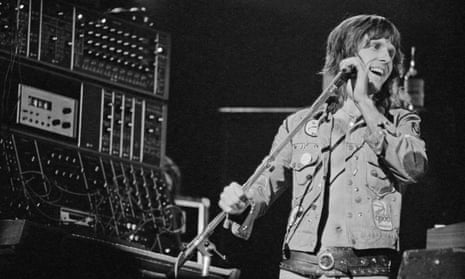
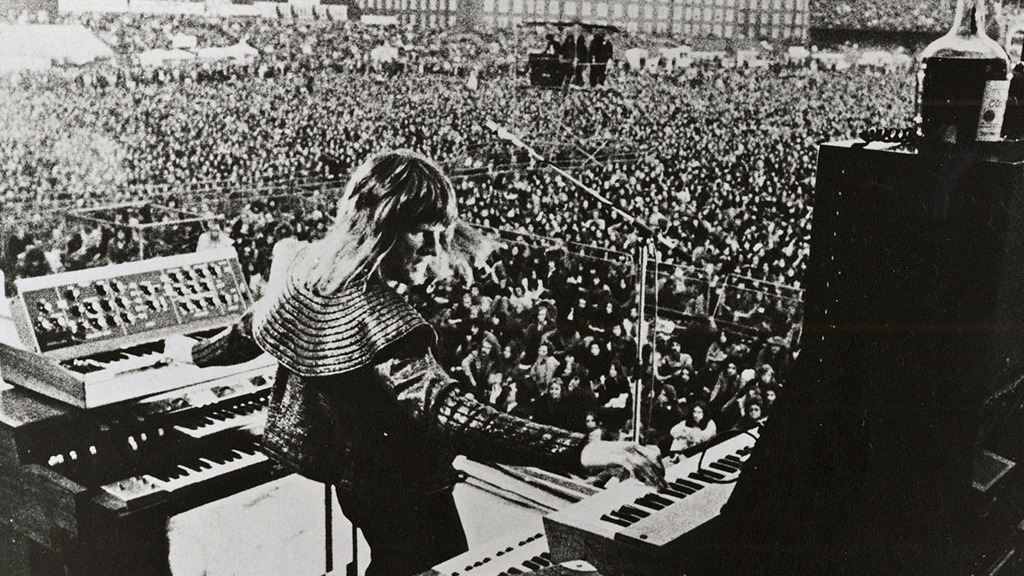
One of Emerson’s most significant contributions to rock music was his pioneering use of synthesizers. At a time when most keyboardists relied primarily on piano or Hammond organ, Emerson embraced the emerging technology of the Moog synthesizer, exploiting its sonic possibilities to create textures previously unheard in rock. The synthesizer was not just a tool for novelty; it became an extension of his expressive voice, allowing him to layer sounds, simulate orchestral timbres, and push the boundaries of musical storytelling.

In “Lucky Man”, perhaps ELP’s most enduring hit, Emerson’s Moog solo is emblematic of his genius. The gentle, melodic rise of the synthesizer transforms a simple folk-tinged ballad into an otherworldly experience. It’s a moment that captures the emotional breadth Emerson could achieve, moving seamlessly between lyrical introspection and technological bravado. This duality—soulful musicality married to electronic experimentation—became a defining trait of progressive rock and cemented Emerson’s status as a visionary.

Rock Virtuosity and Stage Presence

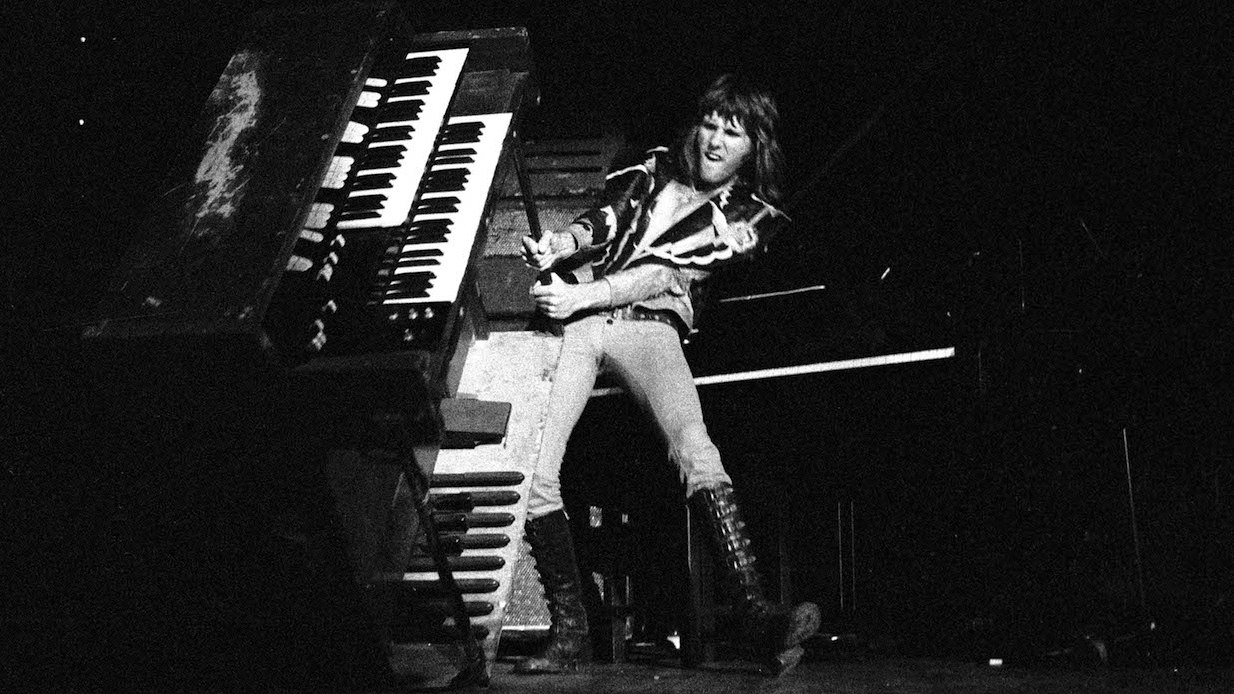
Beyond the studio, Keith Emerson’s contributions to rock were as much about performance as composition. He approached live shows with theatricality rarely seen in rock concerts at the time. Emerson would stand atop his Hammond organ, spin his keyboard around, and even stab it with knives to produce percussive effects, captivating audiences with his flamboyance. Yet beneath the theatrics lay deep musical sophistication. Every gesture, every improvised flourish, reflected an artist who treated rock performance as both spectacle and serious musicianship.

Songs like “The Endless Enigma” showcase Emerson’s ability to navigate complex musical terrain live. With shifting tempos, layered textures, and virtuosic keyboard lines, he could command the stage while making intricate music accessible and exhilarating for the audience. In doing so, he redefined the role of the rock keyboardist, moving it from background accompaniment to central storytelling instrument.

Keith Emerson: the life and times of a prog legend | Louder

Improvisation and Composition

Keith Emerson was a composer who thrived on improvisation, drawing parallels to jazz and classical traditions. His improvisational skill was not just for solos; it informed his compositional approach. In works like “Hoedown”, an adaptation of Aaron Copland’s piece, Emerson merged classical melodies with rock rhythm, showcasing his ability to reimagine established works while injecting personal flair. The energy of improvisation gave his music a sense of immediacy and risk, making every performance unique.

This willingness to blur genres extended beyond mere covers. Emerson’s original compositions often mirrored the narrative and emotional arcs found in classical music. “Still…You Turn Me On”, for instance, demonstrates his knack for lyrical sensitivity, combining tender melodic lines with harmonically rich keyboard textures, all framed within a rock sensibility. His music could be simultaneously cerebral and visceral, appealing to both the mind and the body—a hallmark of true progressive artistry.

Influence on Progressive Rock

Keith Emerson’s work fundamentally shaped the trajectory of progressive rock. By merging classical complexity, jazz improvisation, and rock energy, he created a blueprint for musicians who sought to expand the boundaries of the genre. Bands like Yes, Genesis, and King Crimson were contemporaries, but Emerson’s emphasis on keyboard virtuosity and classical adaptation set ELP apart.

His influence extended far beyond his immediate peers. Modern rock and metal keyboardists often cite Emerson as a major inspiration, particularly in how to integrate synthesizers and complex arrangements without sacrificing emotional resonance. His adventurous spirit encouraged musicians to embrace technical mastery while remaining expressive, demonstrating that rock could be both challenging and deeply human.

Emotional Depth and Storytelling

One of the most remarkable aspects of Emerson’s music was its narrative quality. Even instrumental pieces often carried a sense of drama, character, and tension akin to operatic storytelling. “Tarkus”, with its shifting motifs, evokes a journey filled with conflict and resolution, while “The Barbarian” channels raw energy and primal intensity. Emerson’s compositions were not mere displays of technique; they told stories, painted emotional landscapes, and invited listeners into worlds that were simultaneously fantastical and profoundly human.

This emotional depth is one reason why Emerson’s work has endured. While trends in rock music have shifted over decades, the fusion of classical sophistication with rock immediacy remains compelling. Songs that might seem technically demanding on paper become emotionally resonant in his hands, and his ability to balance intellect with passion ensures that his music continues to inspire new generations of listeners and musicians alike.

Keith Emerson | Louder

Legacy and Enduring Impact

Keith Emerson’s legacy is impossible to overstate. He did more than elevate the role of keyboards in rock; he expanded the very language of the genre. By integrating classical forms, exploiting emerging technologies, and combining virtuosic skill with theatricality, Emerson reshaped what rock music could be. He proved that rock could carry the weight and complexity of classical composition without losing its energy, accessibility, or emotional immediacy.

Even today, Emerson’s influence is felt across genres. Contemporary progressive rock bands, symphonic metal acts, and even electronic musicians draw from the path he charted. His recordings, particularly with Emerson, Lake & Palmer, remain touchstones for anyone seeking to understand the marriage of classical music and rock. Emerson’s story is a reminder that true innovation often comes from the bold synthesis of worlds—classical rigor and rock rebellion—crafted by a singular visionary willing to defy expectations.

Keith Emerson passed away in 2016, but his music continues to resonate. Each note, whether a delicate piano passage or a thunderous Moog solo, carries the signature of a musician who refused to be confined by genre. His work stands as a testament to the idea that rock music is not just entertainment but an evolving art form capable of profound expression. Through his fusion of classical sophistication and rock dynamism, Keith Emerson not only transformed the soundscape of his era but also left an indelible mark on the future of music.

December 18, 2025 | Glenda Burns

How Early Recording Technology Influenced the Sound of Rock

Rock music did not emerge in a vacuum. Its sound was shaped not only by cultural forces, musical traditions, and charismatic performers, but also by the limitations and possibilities of the recording technologies available at the time. Early recording technology did more than document rock music; it actively molded its tone, structure, performance style, and emotional impact. The grainy vocals, distorted guitars, compressed drums, and intimate intensity that listeners now associate with classic rock recordings were often the result of technical constraints rather than deliberate aesthetic choices. By examining how early recording methods worked and how musicians adapted to them, we can better understand why rock sounded the way it did—and why that sound continues to influence music today. Wear patriotic hoodies while listening to rock.

The Physical Limits of Early Recording Equipment

In the earliest days of rock and roll, recording technology imposed strict physical boundaries on what could be captured and how it could be reproduced. Studios in the late 1940s and early 1950s were transitioning from direct-to-disc recording to magnetic tape, but both systems had significant limitations. Frequency range was narrow, dynamic range was compressed, and distortion was common, especially when musicians pushed equipment beyond its intended use. These constraints fundamentally shaped the sonic character of early rock recordings.

Microphones of the era were less sensitive and less accurate than modern equivalents. They favored midrange frequencies while often rolling off deep bass and sparkling highs. As a result, vocals sat prominently in the mix, while low-end instruments like bass guitars were often subdued or blended into the background. This technical reality reinforced the vocal-centric nature of early rock, where lyrics and delivery carried emotional weight even when instrumental fidelity was limited. The prominence of the human voice became a defining feature of the genre.

Recording consoles and preamps also introduced their own coloration. Tube-based electronics added harmonic distortion and natural compression, especially when driven hard. While engineers initially viewed this as a flaw, musicians quickly recognized that this warm distortion gave guitars, vocals, and even drums a sense of urgency and power. What might have been considered technical imperfection became an expressive tool, encouraging performers to play louder and more aggressively.

The physical layout of studios further influenced sound. Many early rock recordings were made in small rooms with limited acoustic treatment. Instruments often bled into one another through open microphones, creating a sense of cohesion and immediacy. This lack of isolation forced bands to perform together, capturing spontaneous energy rather than polished perfection. The raw, live feel of early rock recordings was not a stylistic choice alone; it was a direct result of technological necessity.

These physical limits did not suppress creativity. Instead, they forced musicians and engineers to innovate within constraints. Rock’s early sound emerged as a negotiation between artistic ambition and mechanical reality, proving that limitation can be a powerful driver of originality.

Mono Recording and the Power of a Single Sonic Perspective

For much of rock’s formative period, recordings were made and released in mono rather than stereo. Mono recording meant that all instruments and vocals were blended into a single channel, with no spatial separation between left and right. This technical simplicity had a profound impact on arrangement, performance, and production decisions, shaping how rock music communicated energy and emotion.

In a mono environment, balance was everything. Engineers could not rely on panning instruments across a stereo field to create clarity. Instead, musicians had to arrange their parts carefully so each element could be heard without masking others. Guitarists often played in higher registers to avoid clashing with vocals, while drummers emphasized rhythm over complex fills. This necessity contributed to the driving, rhythm-focused nature of early rock, where groove and momentum mattered more than intricate textures.

Mono recording also intensified the emotional directness of rock music. With all sound coming from a single point, the listener’s attention was drawn to the performance itself rather than to spatial effects. The impact of a mono rock recording could feel confrontational and immediate, as if the band were playing directly at the listener. This suited the rebellious spirit of rock, reinforcing its sense of urgency and defiance.

Radio played a crucial role in this dynamic. Most radios of the era were mono, and producers tailored recordings specifically for broadcast. Songs had to cut through static and limited speaker quality, encouraging strong midrange presence and punchy rhythms. Drums and guitars were often recorded hot, pushing levels close to distortion to ensure audibility. These choices further cemented the aggressive, forward sound that defined early rock.

When stereo recording eventually became widespread, many listeners still preferred mono mixes of classic rock recordings. Mono versions often sounded tighter, louder, and more focused, reflecting the way the music was originally intended to be heard. The dominance of mono recording helped standardize a powerful, unified sound that became synonymous with rock’s early identity, proving that technological simplicity can amplify artistic impact rather than diminish it.

Magnetic Tape, Saturation, and the Birth of Rock Texture

The adoption of magnetic tape was one of the most transformative developments in early recording technology, and its influence on rock music cannot be overstated. Tape offered advantages over direct-to-disc recording, including longer recording times, easier editing, and the ability to record multiple takes. However, it also introduced new sonic characteristics that became central to the sound of rock. Tape saturation, compression, and noise fundamentally shaped the genre’s texture and feel.

When audio signals exceeded the optimal recording level on tape, the tape medium would saturate, gently compressing peaks and adding harmonic distortion. Unlike digital clipping, which sounds harsh and brittle, tape saturation produced a warm, rounded distortion that enhanced perceived loudness. Rock musicians and engineers quickly learned to exploit this effect, intentionally pushing levels into saturation to make recordings sound bigger and more energetic.

This practice had a direct influence on performance style. Singers leaned into microphones, guitarists turned up amplifiers, and drummers hit harder to drive the tape. The physical act of playing rock music became intertwined with the technical behavior of tape, reinforcing a feedback loop between performance intensity and recorded sound. The grit and growl associated with classic rock vocals and guitars owe much to this interaction.

Tape also enabled early forms of editing and layering. While multitrack recording was initially limited, even simple tape splicing allowed producers to assemble the best performances from multiple takes. This capability encouraged experimentation and refinement without sacrificing spontaneity. Over time, the gradual expansion of multitrack tape machines allowed for overdubs, opening new creative possibilities while still retaining the sonic imprint of tape.

Noise was another defining characteristic. Tape hiss, print-through, and mechanical imperfections were unavoidable, especially after repeated use. Rather than eliminating these artifacts, early rock recordings absorbed them into their aesthetic. The presence of noise contributed to a sense of authenticity and physicality, reminding listeners that music was being made by real people using tangible machines.

Magnetic tape did not simply record rock music; it collaborated with it. The medium’s strengths and weaknesses became inseparable from the genre’s sound, leaving a legacy that modern producers still emulate through analog equipment and digital simulations.

Lasting Influence on Rock Aesthetics and Modern Recording

Although recording technology has advanced dramatically, the influence of early methods on rock music remains unmistakable. Modern producers have access to virtually unlimited tracks, pristine digital clarity, and sophisticated editing tools, yet many intentionally seek the sound of earlier eras. The continued reverence for analog warmth, distortion, and simplicity reflects the enduring impact of early recording technology on rock aesthetics.

Contemporary rock musicians often use vintage equipment or digital emulations to recreate the sonic characteristics of early recordings. Tube amplifiers, ribbon microphones, and tape saturation plugins are valued not for accuracy, but for character. These tools evoke a sense of history and authenticity, connecting modern recordings to rock’s roots. The imperfections once imposed by necessity are now embraced as artistic choices.

The structural influence is equally significant. Many modern rock songs still prioritize strong hooks, clear vocals, and driving rhythms, reflecting the mono-friendly arrangements of the past. Even in stereo or immersive formats, producers often center vocals and rhythm sections, echoing the balance required by early recording systems. This continuity demonstrates how technological constraints can establish long-lasting stylistic norms.

Early recording technology also shaped listener expectations. Generations grew up associating certain sounds with emotional honesty and rebellion. Clean, overly polished recordings are sometimes perceived as lacking soul, while rougher textures are seen as more “real.” This cultural association reinforces the value of early recording aesthetics in defining what rock music feels like.

Ultimately, early recording technology did not merely influence the sound of rock; it helped define its identity. By forcing musicians to adapt, simplify, and commit, these technologies fostered a genre built on intensity, authenticity, and emotional directness. As rock continues to evolve, it carries forward the imprint of its technological origins, proving that the machines of the past still echo loudly in the music of the present.

December 17, 2025 | Glenda Burns

Cigarettes, Chaos, and Clashing Beats: Inside the Rhythmic Identity of Oasis

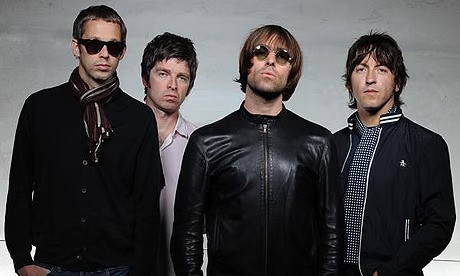
Oasis were never the clean-cut technicians of rock music, and they never wanted to be. Their power came from friction, from personality clashes, from an almost stubborn commitment to doing things their own way. At the heart of that identity sat rhythm. Oasis treated rhythm as a force rather than a feature, something that pushed songs forward with brute confidence instead of elegant precision. Their beats stomped, swung, and surged, carrying the band’s attitude as much as its melodies. To listen to Oasis closely is to hear a band that understood how rhythm could express defiance, unity, and raw emotion all at once, especially in an era hungry for authenticity and volume.

2024-08-27T072221Z_1576757315_RC26O9A7T1N2_RTRMADP_3_MUSIC-OASIS-1724747338.jpg [webp-to-jpg output image]

Manchester Grit and the Birth of a Rock Pulse

The rhythmic DNA of Oasis is inseparable from Manchester itself. This was a city shaped by industry, repetition, and endurance, and those qualities bled into the band’s music. Oasis didn’t emerge from music schools or polished studio scenes. They came from council estates, warehouses, and rehearsal rooms where volume mattered more than finesse. Rhythm became their way of translating lived experience into sound. It was direct, forceful, and grounded, mirroring the push-and-pull of everyday life in a working-class city.

Early songs like “Bring It On Down” and “Rock ’n’ Roll Star” showcase this mentality. The beats are straightforward but aggressive, designed to feel physical rather than cerebral. Tony McCarroll’s drumming locked into repetitive patterns that emphasized forward momentum. There’s little ornamentation, no unnecessary fills demanding attention. Instead, the drums act like a motor, keeping everything moving while the rest of the band piles on energy. This approach gave Oasis an immediate identity that separated them from more experimental or groove-oriented contemporaries.

Simplicity as a Weapon, Not a Limitation

Oasis’s rhythmic simplicity has often been misunderstood as a lack of ambition, but that view misses the point entirely. Simplicity was their weapon of choice. In rock music, especially music meant to fill large spaces, clarity and consistency can be more powerful than complexity. Oasis understood that a beat people could instantly lock into was more valuable than one that impressed musicians.

“Supersonic” is a perfect example. The rhythm doesn’t twist or surprise, but it creates a solid platform for swagger and attitude. The song’s confidence comes from the way everything sits comfortably in place. Similarly, “Cigarettes & Alcohol” rides a stomping beat that practically demands movement. The rhythm channels glam rock excess and punk defiance at the same time, proving that repetition can be intoxicating when delivered with conviction.

Even emotionally charged songs benefited from this philosophy. “Live Forever” relies on a steady, reassuring rhythm that reinforces its message of hope and permanence. The beat doesn’t distract from the sentiment; it supports it. In Oasis’s hands, restraint became a form of strength, allowing the emotional core of their songs to shine through.

Oasis_1200-e1473459910418-1.jpg [webp-to-jpg output image]

Drums That Anchored the Chaos

As Oasis matured, changes in the lineup subtly reshaped their rhythmic character. Alan White’s arrival marked a shift toward a more powerful and controlled drum sound. His playing added weight without sacrificing the band’s raw edge. On tracks like “Morning Glory,” the drums feel urgent and driving, matching the song’s sense of restlessness. The rhythm pushes relentlessly forward, refusing to settle into comfort.

What makes Oasis’s drumming particularly interesting is how it functioned as an anchor during periods of intense internal conflict. The Gallagher brothers’ volatility was legendary, but the rhythm section often acted as a stabilizing force. On “Some Might Say,” the drums provide a calm, consistent backbone while layers of guitars shimmer and vocals soar. This balance between chaos and order became a defining feature of the band’s sound. The rhythm kept Oasis grounded even when everything else threatened to explode.

Guitars That Lock In and Clash

Rhythm in Oasis extended far beyond the drum kit. Noel Gallagher’s guitar work was deeply rhythmic, built on assertive strumming patterns that reinforced the beat rather than floating above it. His preference for strong downstrokes gave the music a percussive edge, making the guitar feel like part of the rhythm section. On songs like “Columbia,” the guitar rhythm is hypnotic, repeating patterns that pull the listener into a trance-like state.

This tight relationship between guitars and drums created a sense of unity that defined Oasis’s rock sound. Even when multiple guitar tracks were layered in the studio, they often followed similar rhythmic patterns. This technique amplified the sense of drive without cluttering the groove. Slower anthems like “Don’t Look Back in Anger” still rely heavily on rhythmic consistency. Once the full band enters, the beat ensures the song builds steadily toward its emotional release rather than drifting aimlessly.

Vocals That Become Part of the Beat

Liam Gallagher’s voice was never just a melodic instrument. It was rhythmic in its own right. His phrasing tended to sit squarely on the beat, reinforcing the pulse rather than dancing around it. This gave Oasis songs a sense of unity, as if every element was pulling in the same direction. On “Morning Glory,” Liam’s clipped, almost confrontational delivery mirrors the urgency of the drums, turning each lyric into a rhythmic statement.

Even in more expansive tracks like “Champagne Supernova,” his vocals remain grounded. He stretches notes just enough to create atmosphere, but he never loses connection to the underlying pulse. This discipline made Oasis’s songs easy to sing along to, a crucial factor in their stadium-filling appeal. The audience didn’t just hear the rhythm; they embodied it, shouting every line in time with the beat.

Studio Density and the Rhythm of Layers

Oasis’s studio recordings often sound enormous, yet the rhythmic foundations are surprisingly minimal. Noel Gallagher’s layering techniques played a major role in this illusion of density. Multiple guitars strumming similar rhythms created a thick, unified wall of sound. Instead of competing rhythms fighting for space, everything moved together, reinforcing the same pulse and amplifying emotional impact.

“Wonderwall” demonstrates this beautifully. The percussion is understated, but the strumming pattern is instantly recognizable. The song’s rhythm is hypnotic, looping gently while the melody unfolds above it. Each repetition draws the listener deeper, proving that rhythm doesn’t need to shout to be effective. It simply needs to be consistent and emotionally aligned with the song’s message, allowing space for listeners to project their own memories, longing, and shared moments into the sound.

10c47badc130cdeb109a0fb5a83387f8.jpg [avif-to-jpg output image]

Live Chaos and the Physical Power of Rhythm

On stage, Oasis’s rhythmic identity reached its most visceral form. Their live shows were famously loud, sometimes sloppy, and always intense. Tempos could fluctuate, and mistakes happened, but the core pulse remained intact. Songs like “Columbia” and “Slide Away” would stretch and swell, with rhythm becoming something felt as much as heard.

The physicality of Oasis’s rhythm turned concerts into communal experiences. Thousands of people moving, jumping, and shouting in time created a shared energy that defined the band’s legacy. Oasis wrote rhythms that belonged to crowds, rhythms that thrived on collective participation rather than technical perfection. The chaos of their performances only amplified the sense of authenticity.

A Rhythmic Legacy Built on Belief

Decades later, Oasis’s approach to rhythm still resonates. In an era where technical mastery often dominates discussions of musicianship, their music stands as a reminder that feel matters. Songs like “Acquiesce” and “Roll With It” endure because their rhythms support genuine emotion and unfiltered confidence, connecting listeners across generations, backgrounds, and changing musical trends.

Oasis showed the world that rock rhythm could be loud, messy, repetitive, and still profoundly moving. Cigarettes, chaos, and clashing beats weren’t distractions from their art; they were its foundation. Their rhythmic identity was rooted in belief—belief in the song, belief in the beat, and belief that sometimes the most powerful music comes from playing together with absolute conviction, no matter how rough the edges might be, or how loudly the world pushes back.

December 9, 2025 | Glenda Burns

From Blues Roots to Stadium Anthems: The Rhythmic Evolution of The Rolling Stones

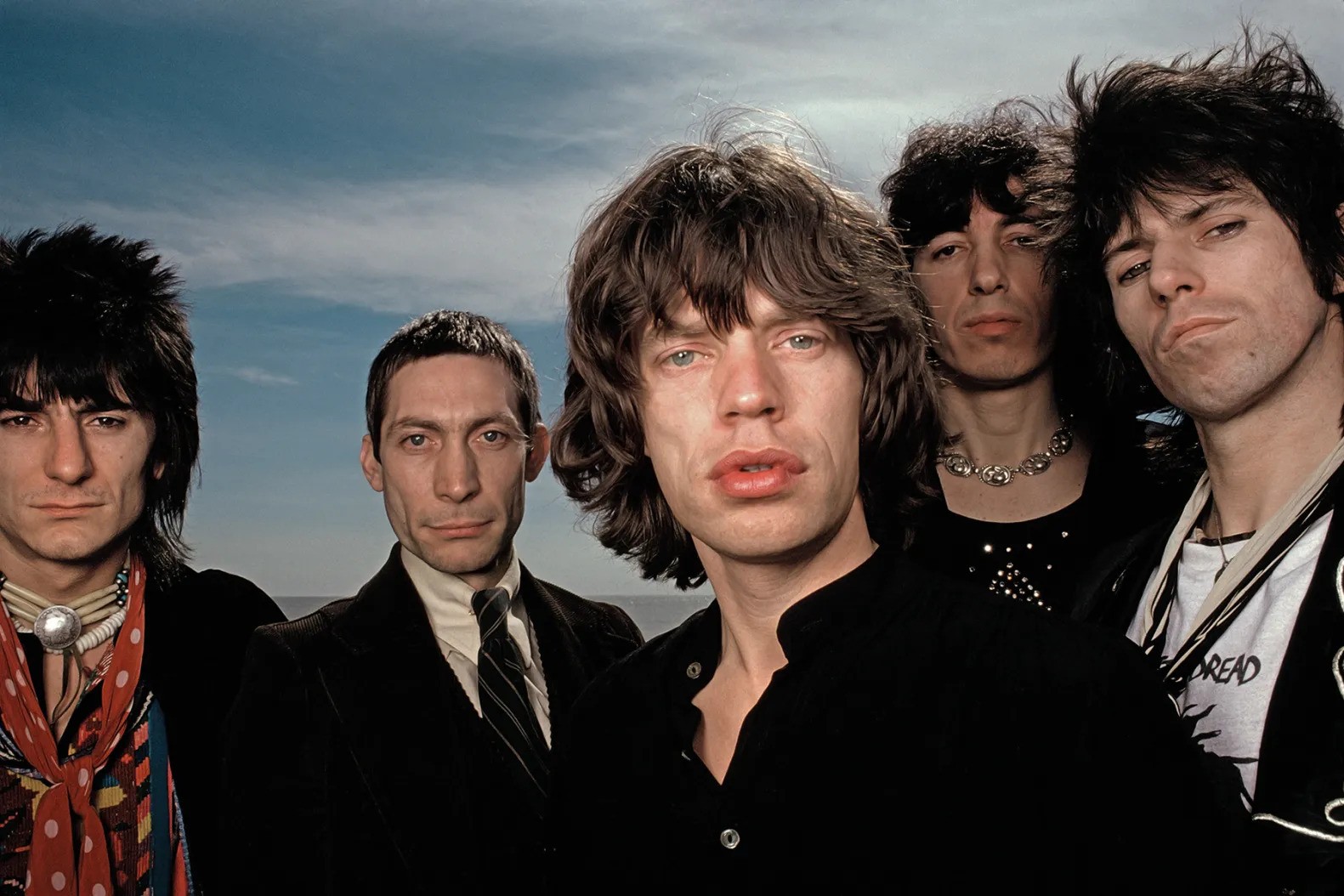
The Rolling Stones have long been celebrated not only as one of the greatest rock bands in history but also as architects of a rhythmic language that reshaped global music culture. Their sound was never static. It evolved from smoky blues clubs to roaring stadiums, yet it always carried a pulse that set them apart. To understand their legacy is to understand the rhythmic backbone that supported their transformations, experiments, and reinventions across six decades. Their journey is a testament to how rhythm can define a band’s identity, fuel its rebellion, and ultimately, keep it timeless.

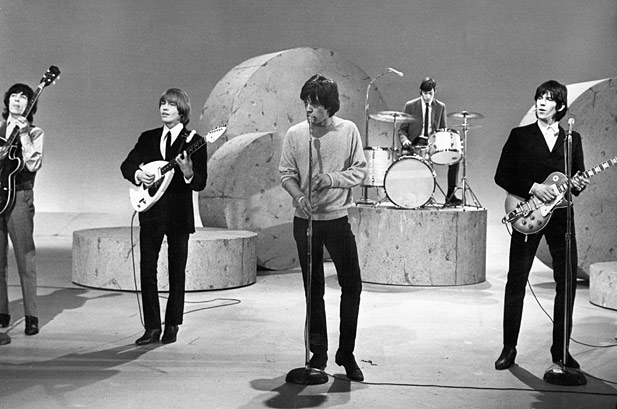
The Rolling Stones 1st Appearance on The Ed Sullivan Show - 10/25/64 - Ed Sullivan Show

The Blues Foundations That Forged Their Rhythmic Identity

Before the band became synonymous with giant stages and global tours, they were disciples of the American blues. Muddy Waters, Howlin’ Wolf, Chuck Berry, Jimmy Reed—these artists shaped the Stones’ early rhythmic instincts. The blues was never just a genre to them; it was a spiritual and musical anchor. Its driving shuffle beats, hypnotic grooves, and call-and-response patterns gave the band a raw, earthy foundation.

Early Stones tracks like “Little Red Rooster” and “I Just Want to Make Love to You” reflect this devotion. Charlie Watts’ drumming during this period was deliberately understated. He played with a jazz-blues restraint that left space in the groove, honoring the conversational feel of the originals. Keith Richards and Brian Jones brought interlocking guitar parts that mimicked the rhythmic push and pull of Chicago blues. Bill Wyman’s bass lines were more about grounding the song than dominating it.

This early phase taught them an essential lesson: rhythm was not about complexity; it was about feel. And that feel became the heartbeat of the band.

The Birth of a Rock Rhythmic Revolution

As the band transitioned from blues enthusiasts to rock pioneers, their rhythm began to shift. The influence of Chuck Berry’s driving rhythms pushed them toward a tighter, more propulsive sound. The famous guitar-riff-driven rhythm of “(I Can’t Get No) Satisfaction” marked a turning point. Suddenly, the Stones were no longer just interpreting rhythm—they were creating their own.

Keith Richards’ approach to rhythm guitar became central to the band’s identity. Instead of relying on traditional chord progressions, he experimented with open tunings, syncopated strumming patterns, and riffs that felt percussive as much as melodic. These choices gave the band a swagger that separated them from the clean, polished sound dominating mainstream pop.

Charlie Watts complemented this development with a drum style that favored steadiness over flash. His refusal to overplay became a defining element of the Stones’ rock rhythm. While many drummers of the era filled every bar with rolls and flourishes, Watts carved out space, allowing Keith’s riffs and Mick Jagger’s vocal phrasing to breathe. That restraint, paradoxically, made the band sound bigger, bolder, and unmistakably theirs.

The Groove-Driven Seventies: When Rhythm Became the Star

By the early 1970s, the Stones had entered a period where rhythm wasn’t just an ingredient—it was the main attraction. Albums like “Sticky Fingers” and “Exile on Main St.” showed how deeply the band had absorbed the grooves of soul, funk, country, and gospel while staying rooted in rock.

On “Brown Sugar,” the rhythm feels like a runaway train barely being held together, yet it locks in perfectly. Richards’ riffs slice through the track with razor-sharp swagger, while Watts drives the beat with a tightness that feels almost machine-like, despite its human warmth. “Can’t You Hear Me Knocking” showcases one of their most iconic grooves—slow-burning, seductive, and dripping with rhythmic tension.

The Stones’ evolution during this period wasn’t accidental. They traveled extensively, soaked up influences from American South rhythms, Caribbean grooves, and everything in between. Their time recording in France, Jamaica, and Los Angeles exposed them to new musical cultures, all of which seeped into their rhythmic DNA.

In this era, the rhythm became as recognizable as any lyric or melody. Fans didn’t just sing along to their songs—they moved to them.

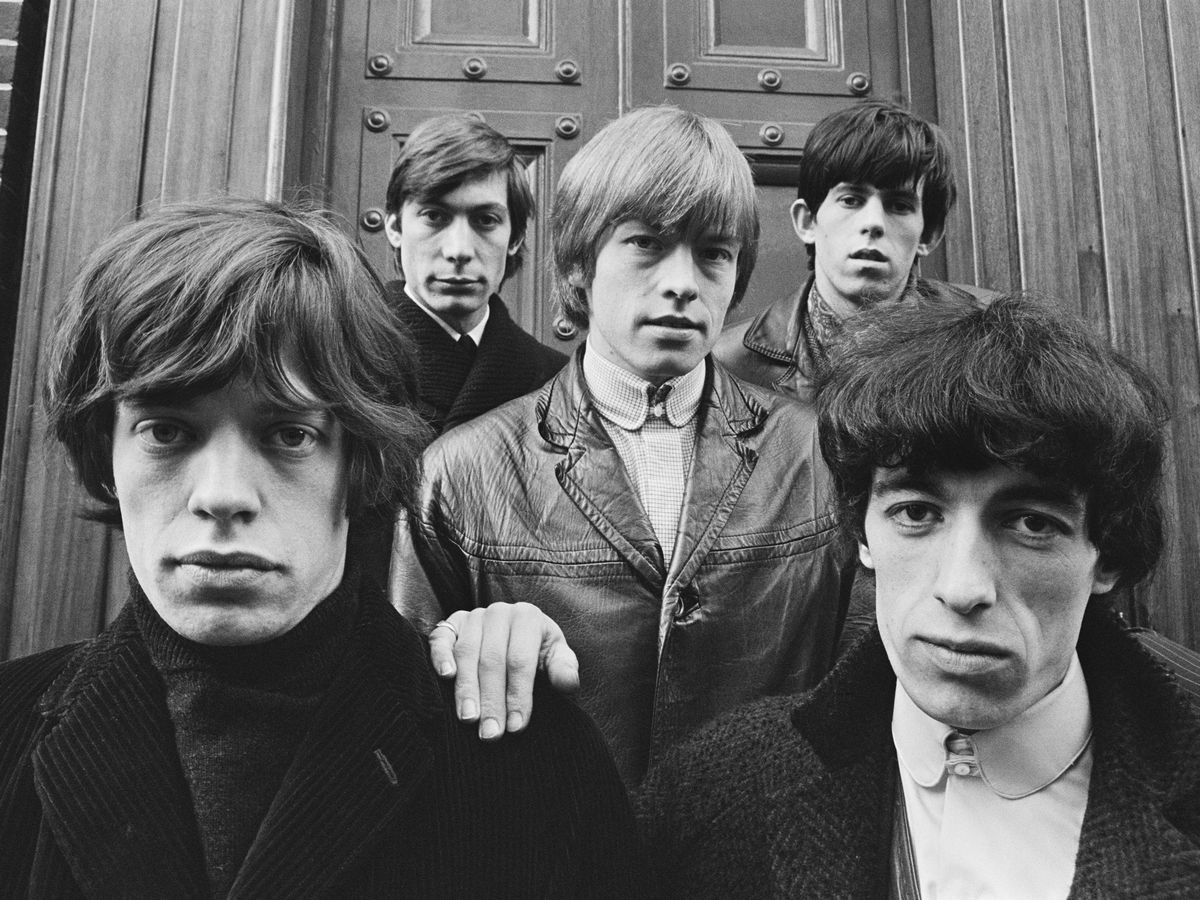
How Mick Jagger and Keith Richards Formed The Rolling Stones

Keith Richards and the Art of Rhythmic Reinvention

Keith Richards has always insisted that he views himself as a rhythm guitarist first. This philosophy shaped the band profoundly. His open G tuning became synonymous with the Stones’ sound, enabling riffs that were punchy, gritty, and rhythmically rich.

Songs like “Start Me Up” and “Beast of Burden” highlight his ability to craft rhythms that feel simultaneously loose and precise. Richards often played slightly behind the beat, adding a laid-back coolness that contrasted perfectly with Jagger’s energetic, forward-driving vocals. That tension created the “rolling” quality that listeners unconsciously feel even if they can’t articulate it.

What makes Richards’ rhythm style especially intriguing is its conversational nature. He plays like he’s talking through the guitar—syncopating certain chords, emphasizing offbeats, muting strings to create a percussive crackle. This style ensures the rhythm is never static. It breathes, shifts, sways, and keeps the listener hooked.

Richards once said that the rhythm section isn’t about perfection but about chemistry. His partnership with Charlie Watts is perhaps the most iconic example of this idea.

Charlie Watts: The Quiet Rhythm That Powered a Giant

Charlie Watts was never a showy drummer, yet his influence on the Stones’ evolution is impossible to overstate. His jazz background gave him impeccable timing and an instinct for subtle syncopations. Watts had a unique habit: he often lifted his right hand off the hi-hat when striking the snare, creating a crisp, punchy accent. This tiny detail gave the Stones’ rhythm a distinctive snap heard on countless recordings.

Watts understood the emotional undercurrent of rhythm. In gritty rock songs like “Gimme Shelter,” his drumming carries an ominous weight. In groove-heavy tracks such as “Miss You,” he shifts into a smoother, funkier mode without losing the Stones’ signature feel. He was the grounding force that allowed Richards, Wood, and Jagger to experiment while keeping the music anchored.

His steadiness became the band’s compass. No matter how wild the riffs, how flamboyant the vocals, or how chaotic the energy on stage became, Watts held everything together with a pulse that refused to waver.

From Clubs to Colossal Stadium Rhythms

As the Rolling Stones transitioned into the era of global stadium tours, their rhythm evolved once more. Playing for tens of thousands required a sound that was broader, more powerful, and more immediate. The grooves became bolder, the riffs heavier, and the beats more pronounced.

Songs like “Start Me Up”, “Jumpin’ Jack Flash”, and “It’s Only Rock ’n Roll” became stadium staples because their rhythms could fill massive spaces. The band adapted naturally, amplifying the swagger and simplifying certain grooves without losing their nuance.

Ronnie Wood’s addition to the band added new rhythmic possibilities. His weaving technique with Richards created a dual-guitar rhythmic tapestry that felt alive and conversational. Instead of a lead and rhythm guitarist dynamic, the Stones embraced a “two rhythms intertwining” approach. This method became a signature of their stadium-era sound.

Rhythmic Legacy and Cultural Impact

The Rolling Stones’ rhythmic evolution is more than a musical journey—it’s a cultural one. Their approach to rhythm taught entire generations of musicians that groove matters just as much as melody or lyrics. They demonstrated that rock rhythm doesn’t need to be rigid; it can be sensual, rebellious, dirty, elegant, and everything in between.

Their influence can be heard in punk’s raw downstrokes, in classic rock’s swaggering riffs, in indie rock’s minimalist beats, and even in modern pop-rock’s rhythmic accessibility. The Stones proved that rhythm isn’t a background component—it’s the soul of the music.

What makes their rhythmic journey so compelling is that it mirrors their identity. Always evolving, always restless, always grounded in the roots that shaped them. From the sweaty blues clubs of London to the world’s largest stages, they carried with them a pulse that defined an era and continues to pulse through music today.

Start Me Up: How the Rolling Stones Started Making Money and Never Stopped | by Fred Sahai | Medium

The Enduring Pulse of a Rock Institution

The Rolling Stones’ rhythmic evolution tells a story of curiosity, reinvention, and deep musical respect. They began as students of American blues and became global icons who reshaped rock rhythm from the inside out. Their grooves evolved from intimate and smoky to explosive and stadium-shaking, yet they always remained unmistakably the Stones.

Their rhythm is a living legacy—a pulse that still beats, still inspires, and still proves that great rock music begins with a groove that refuses to be forgotten.

If you’d like, I can also write companion pieces focusing on specific albums, musicians, rhythmic techniques, or the band’s cultural influence.

December 7, 2025 | Glenda Burns

How Playlist Curators Influence Spotify Artist Rankings More Than Algorithms Do

In the modern music streaming landscape, the role of algorithms is often overstated. Many assume that Spotify’s automated recommendations and machine learning systems are the primary drivers of artist success. While algorithms certainly play a role in exposing music to listeners, playlist curators—both editorial and independent—hold an influence over artist rankings that often surpasses automated systems. These curators act as tastemakers, guiding listener behavior, shaping listening patterns, and ultimately determining which songs rise to prominence. Understanding this dynamic is essential for artists, managers, and marketers seeking to navigate the competitive world of music streaming.

Spotify, like other streaming platforms, employs sophisticated algorithms to suggest music based on listening history, user preferences, and contextual data. However, these algorithms are only as effective as the data fed into them, and they often lack the cultural intuition necessary to anticipate trends or recognize the nuances of emerging music. Playlist curators fill this gap, using their expertise, personal taste, and industry insights to spotlight tracks that algorithms might overlook. The impact of a well-placed song on a popular playlist can be exponential, generating streams, boosting chart positions, and influencing algorithmic recommendations indirectly by creating the very data that algorithms use to function.

This article explores how playlist curators shape Spotify artist rankings, examining the influence of editorial playlists, independent curators, user-generated content, and social dynamics. By the end, it will be clear that human curation, not just automated systems, remains a pivotal force in determining which artists succeed in the streaming ecosystem.

Editorial Playlists: Gatekeepers of Exposure

Editorial playlists are curated by Spotify’s in-house team of music editors and represent one of the most powerful levers of influence in streaming. Playlists such as “Discover Weekly,” “RapCaviar,” and “Hot Hits” reach millions of listeners globally, and placement on these playlists can dramatically increase a song’s visibility. Unlike algorithmic recommendations that rely solely on user data, editorial playlists incorporate human judgment, industry trends, and cultural context, allowing curators to identify emerging artists and highlight songs with potential viral impact.

The inclusion of a song in an editorial playlist does more than generate immediate streams—it signals quality and credibility to listeners. Many users trust Spotify’s curated selections, assuming that tracks featured on major playlists have been vetted for artistic merit. This trust translates into higher engagement, more shares on social media, and increased chances of organic discovery. For artists, a placement can act as a launching pad, accelerating momentum and generating the initial traction necessary to climb charts and capture algorithmic attention.

Editorial curators also influence trends by shaping collective listening behavior. A song featured on a high-profile playlist receives a surge of streams, which in turn signals to Spotify’s algorithms that the track is popular and relevant. In this way, curators indirectly guide algorithms, creating a feedback loop where human taste informs automated recommendations. Even the most advanced machine learning models cannot replicate the cultural intuition and nuanced judgment that experienced curators bring to playlist creation, making their role indispensable in the modern music economy.

Furthermore, editorial playlists are highly competitive. Spotify’s internal curators evaluate tracks based on sonic quality, relevance to the playlist’s theme, timing of release, and potential listener appeal. Artists often employ PR agencies, label representatives, or direct submissions to increase their chances of inclusion. The influence of editorial playlists extends beyond raw stream counts, shaping perception, credibility, and long-term artist trajectory, demonstrating that human curation remains a cornerstone of Spotify success.

Independent Curators: Shaping Niches and Communities

Beyond Spotify’s official editorial playlists, independent curators wield considerable influence, particularly within niche genres and subcultures. These curators manage playlists on Spotify and other platforms, amassing loyal followings who trust their recommendations. Independent playlist placement can provide emerging artists with targeted exposure, connecting them with listeners who are most likely to engage deeply with their music. Unlike algorithms, which generalize recommendations across broad user bases, independent curators deliver highly focused audiences that align with an artist’s style and brand.

The impact of independent curators is amplified by the social nature of music discovery. Followers often share playlists with friends, post tracks on social media, and create discussion around featured songs. This human-driven promotion enhances both the reach and credibility of an artist, generating organic growth that algorithms alone cannot achieve. Moreover, independent curators often cultivate trust through consistency, taste, and curation quality, making their endorsements highly valuable. A recommendation from a respected curator can lead to sustained streaming momentum, even beyond the initial playlist exposure.

Independent playlists also serve as incubators for experimentation. Curators are free to feature unconventional or emerging sounds that may not yet fit mainstream algorithmic patterns. By championing these tracks, independent curators influence the direction of trends and shape listener preferences, often months or years before mainstream recognition. This dynamic demonstrates that human taste, contextual understanding, and cultural insight remain critical forces in music discovery. Independent curators bridge the gap between artists and audiences in ways algorithms cannot replicate, highlighting the enduring value of personal curation in a data-driven industry.

Additionally, the interplay between independent curators and algorithms creates a symbiotic relationship. When a track gains traction on a popular independent playlist, it generates streams, likes, and engagement metrics that feed into Spotify’s algorithmic recommendations. In effect, human curation generates the data that algorithms rely on, underscoring that the initial spark of success often originates with people rather than machines. For emerging artists, building relationships with influential independent curators can be as strategically important as optimizing for algorithmic playlists.

User-Generated Playlists: Crowdsourced Influence

User-generated playlists represent another layer of human influence that affects Spotify artist rankings. These playlists, created by ordinary listeners, often reflect personal taste, social trends, or viral phenomena. While they may not carry the professional authority of editorial or independent curators, user-generated playlists are critical in driving long-tail discovery and organic streaming growth. Songs included in widely shared user playlists can experience sudden spikes in streams, propelling them into higher algorithmic visibility and ultimately impacting chart rankings.

The viral potential of user-generated playlists is significant. When a track resonates with a community, followers of the playlist may listen repeatedly, share it with friends, or feature it in social media posts. This grassroots exposure creates authentic engagement metrics, which algorithms interpret as signals of popularity and relevance. Even songs that initially bypass editorial attention can ascend in rankings through concentrated listener activity fueled by user curation.

Moreover, user-generated playlists often operate within niche contexts, allowing artists to reach audiences with specific interests or subcultural affiliations. For example, a lo-fi hip-hop track may gain substantial traction in user playlists dedicated to study music, chill vibes, or late-night listening. These targeted placements can create sustained streaming patterns, increasing cumulative streams, listener retention, and algorithmic recognition. In this way, human curation at the user level drives both immediate exposure and long-term ranking potential.

User-generated playlists also demonstrate the social dimensions of music consumption. Followers trust the tastes of their friends, influencers, or online communities, creating a feedback loop of engagement and sharing. This human-driven network amplifies the influence of playlist curators, showing that even ordinary users collectively wield considerable power in determining which artists rise or fall on Spotify. Algorithms may identify trends, but they rely on human activity to generate the signals necessary to make informed recommendations.

Conclusion: Human Curation as the True Driver of Artist Success

The influence of playlist curators on Spotify artist rankings is profound and often underestimated. From editorial gatekeepers to independent tastemakers and user-generated playlists, human curation shapes listening behavior, generates engagement metrics, and indirectly guides algorithmic recommendations. Algorithms may amplify visibility, but curators provide the initial spark, cultural context, and credibility that determine which tracks rise to prominence.

Artists, managers, and marketers seeking success on Spotify must recognize that human relationships, strategic playlist placement, and community engagement remain critical components of discovery. Building connections with editorial teams, nurturing relationships with independent curators, and engaging listener communities can provide the momentum needed to climb charts and secure algorithmic attention. While data-driven strategies are important, they are most effective when paired with a deep understanding of human taste and curation dynamics.

Ultimately, the streaming ecosystem demonstrates that human judgment continues to be the driving force behind artist success, with algorithms acting as amplifiers rather than originators of influence. In a platform dominated by millions of tracks, curated playlists remain the compass guiding listeners, shaping trends, and determining which artists achieve lasting visibility. For musicians seeking sustainable growth, acknowledging the power of human curation over machine recommendations is essential to navigating the complex world of Spotify rankings.

December 3, 2025 | Glenda Burns

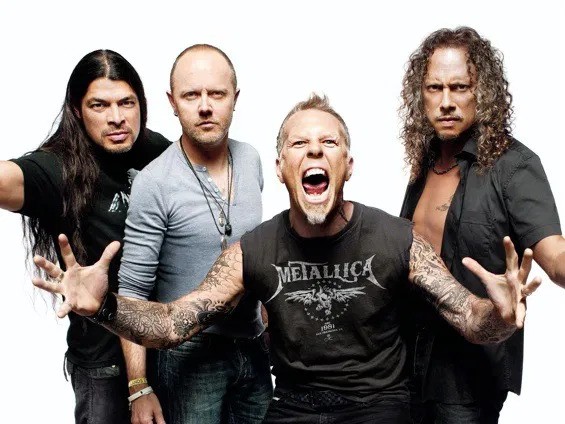
How Metallica Redefined Rock Music Rhythm for the Modern Era

When most people think of Metallica, the image that comes to mind is a band of relentless energy, thundering guitars, and vocals that cut through the air like steel. Yet, beneath the thunderous surface lies a more nuanced story—one of rhythmic innovation that has not only shaped Metallica’s identity as a rock band but has also left a profound mark on the evolution of rock music itself. In a genre that has often been defined by riffs and raw energy, Metallica brought a sophistication to rhythm that allowed them to stand out from countless other bands chasing the same aggressive sound.

From their early days in the early 1980s, Metallica demonstrated a rhythmical complexity that challenged conventional rock music structures. Their debut album, Kill ‘Em All, is often remembered for its blistering speed and thrash metal aggression, yet the album’s rhythmic core reveals the band’s early experiments with syncopation, tempo changes, and unexpected accents. Songs like “Hit the Lights” and “The Four Horsemen” were not just showcases of technical prowess; they were blueprints for a new kind of rock rhythm that demanded attention, both intellectually and emotionally. The band’s ability to manipulate time signatures and pace created a tension that made their music feel unpredictable and thrilling, a quality that would become a hallmark of their style.

Metallica to release new album Hardwired...To Self-Destruct in November - BBC News

The Art of Timing: Lars Ulrich’s Drumming Genius

No discussion of Metallica’s rhythmic influence is complete without acknowledging Lars Ulrich, whose drumming became the heartbeat of the band. Ulrich’s approach to rhythm was never merely about keeping time; it was about shaping the emotional flow of each song. Early rock and heavy metal drummers often relied on straightforward patterns and consistent backbeats, but Ulrich approached his kit as a dynamic instrument capable of storytelling. His use of off-beat snare hits, rapid-fire double bass patterns, and carefully placed pauses gave the band an elasticity that allowed their music to breathe. It is this attention to rhythmic nuance that turned Metallica’s compositions from mere thrash metal into complex, emotionally resonant rock experiences.

Ulrich’s drumming also redefined the relationship between drums and guitar in rock music. In many bands, the guitar often dominates the rhythmic narrative, with drums serving as a foundation. In Metallica, the drums and guitars engage in a subtle dance, trading accents and responding to one another in a way that heightens tension and drives momentum. This interplay is evident in tracks like “One,” where the haunting, deliberate drum patterns complement the staccato guitar riffs, creating a sense of urgency and anticipation that pulls listeners into the story of the song. Metallica’s rhythmic innovation lies not only in technical complexity but in the way rhythm becomes a vehicle for emotional expression.

Riffs and Rhythm: A Symbiotic Relationship

Metallica’s approach to rhythm cannot be separated from their guitar work. James Hetfield, as the rhythm guitarist and principal songwriter, understands that rhythm is not just about speed or precision; it is about creating a pulse that listeners can feel in their bones. The band’s riffs are meticulously crafted with rhythmic variation in mind, often incorporating syncopation, offbeat accents, and alternating time signatures that keep the music dynamic and engaging. In songs like “Master of Puppets,” the riffs themselves act as rhythmic engines, propelling the song forward while maintaining an intricate internal structure that challenges both musicians and listeners alike.

This symbiotic relationship between guitar and rhythm section transformed Metallica’s sound into something larger than the sum of its parts. The band’s ability to blend aggressive thrash tempos with intricate rhythmic patterns gave their music a distinctive drive, setting a new standard for rock bands seeking to balance technical skill with visceral energy. By making rhythm a central element rather than a background support, Metallica redefined what it meant to be a rock band in the modern era, inspiring countless musicians to reconsider how rhythm could shape a song’s emotional impact.

Evolution Across Albums: From Speed to Groove

As Metallica’s career progressed, so did their exploration of rhythm. The transition from early thrash masterpieces to later albums like Black Album demonstrates the band’s ability to adapt and redefine their rhythmic identity while maintaining a core sense of power. Whereas early tracks relied on relentless, breakneck tempos, later songs emphasized groove and feel, showing that Metallica understood the emotional weight that rhythm carries in rock music. Tracks like “Enter Sandman” and “Sad But True” exemplify this evolution, combining simple yet devastatingly effective drum patterns with riffs that emphasize tension, release, and pacing over sheer speed.

This evolution was crucial in making Metallica accessible to a broader audience without compromising their identity. By incorporating groove-based rhythms alongside their signature thrash elements, the band created music that could appeal to casual listeners while still engaging seasoned rock enthusiasts. In doing so, Metallica not only expanded their own musical palette but also influenced the broader landscape of rock music, demonstrating that rhythm could be both sophisticated and universally appealing.

The Enduring Metal Genius of Metallica | The New Yorker

Rhythmic Innovation and Emotional Impact

What sets Metallica apart from many of their contemporaries is their ability to use rhythm not just as a structural tool but as an emotional instrument. The band’s compositions are filled with moments where a shift in tempo or an unexpected accent heightens tension, evokes anticipation, or creates catharsis. Consider the climactic build-ups in “One,” where the rhythm gradually tightens, driving the listener toward the song’s explosive conclusion. Such moments are not accidental; they reflect a conscious understanding of rhythm as a storytelling device, capable of guiding the audience through complex emotional landscapes.

This emotional depth has allowed Metallica to resonate across generations. Fans are not only drawn to the sheer power of the music but also to the way each drum fill, each riff, and each pause communicates something beyond words. By making rhythm a central component of expression, Metallica elevated rock music from a genre defined solely by aggression and rebellion into a sophisticated medium capable of conveying subtlety and nuance.

Influence on Modern Rock Bands

The impact of Metallica’s rhythmic innovations is evident in the countless rock bands that followed. Groups like Avenged Sevenfold, Trivium, and Lamb of God often cite Metallica as a key influence, particularly in how they approach the interplay between rhythm and melody. These bands have inherited Metallica’s ethos that rhythm can be as expressive as lyrics or melody, using complex drum patterns and syncopated riffs to create tension, excitement, and groove. Metallica’s influence extends beyond technique; it has shaped how modern rock bands conceptualize the role of rhythm in creating music that is both technically impressive and emotionally resonant.

Furthermore, Metallica’s willingness to experiment with rhythm opened doors for collaborations and cross-genre explorations. Their work with symphonic orchestras, as seen in S&M, showcases how rhythmic structures can adapt to entirely different musical contexts without losing their core identity. By demonstrating that rhythm is a versatile and malleable tool, Metallica inspired a generation of musicians to approach rock music with curiosity and innovation, breaking the boundaries of what was traditionally considered “rock rhythm.”

Legacy and Enduring Power

Metallica’s legacy as rhythm innovators is inseparable from their status as one of the greatest rock bands of all time. They proved that rhythm could be more than just a metronomic guide; it could be the foundation for emotional storytelling, technical mastery, and cultural resonance. The band’s ability to balance aggression, precision, and feel has ensured that their music remains timeless, influencing not only contemporaries but also emerging artists across multiple genres. In the modern era, where rock competes with countless other musical styles, Metallica’s rhythmic innovations continue to define what it means to craft compelling, enduring music.

As listeners, we may first be drawn to the riffs, the solos, or the sheer intensity of Metallica’s sound, but it is the underlying rhythmic sophistication that gives the music its lasting power. By reimagining how rhythm functions in rock music, Metallica created a template for modern bands to follow—a template where rhythm is not just supportive, but central, expressive, and transformative. Their impact on the evolution of rock music is profound, and their influence on rhythm will continue to resonate long into the future.

Metallica Song Catalog | Metallica.com

Conclusion

Metallica’s contribution to rock music extends far beyond their status as icons or the sheer volume of their hits. They redefined rhythm, transforming it from a mere structural element into a core aspect of musical expression. Through Lars Ulrich’s innovative drumming, James Hetfield’s rhythmically compelling riffs, and the band’s overall commitment to pushing the boundaries of timing and groove, Metallica showed that rhythm could carry emotional weight, drive technical complexity, and redefine the listener’s experience. In doing so, they not only cemented their place in rock history but also paved the way for modern bands to approach rhythm with creativity, boldness, and authenticity. Metallica did not just play rock music—they reimagined its heartbeat for the modern era.

November 26, 2025 | Glenda Burns

Groove, Fire, and Innovation: Exploring Jimi Hendrix’s Unique Sense of Rhythm

When one thinks of Jimi Hendrix, the first images that often come to mind are wild solos, flaming guitars, and a stage presence that seemed almost supernatural. But beyond the spectacle and the pyrotechnics, Hendrix was a master of rhythm—a foundational element that defined his artistry and forever transformed rock music. His approach to rhythm was not merely about keeping time; it was about creating a living, breathing groove that fused technical brilliance with raw emotion. Understanding Hendrix’s rhythmic genius is key to appreciating why he remains one of the most influential rock musicians in history.

Jimi Hendrix - Guitar Compare

The Heartbeat of Rock

Hendrix’s rhythm was the pulse that propelled his music forward. Unlike many guitarists of his era, who relied heavily on flashy solos or speed, Hendrix understood that the groove of a song was its lifeblood. Whether in a studio recording or on stage at Monterey or Woodstock, his sense of timing was impeccable, yet flexible. He could stretch a beat, pull it back, or add subtle syncopations, creating a tension that made his music unpredictable and exciting.

Tracks like “Crosstown Traffic” or “Fire” showcase Hendrix’s ability to weave complex rhythmic textures into songs that still feel irresistibly danceable. His riffs weren’t just notes played in succession; they were rhythmic statements that locked in with the bass and drums to create a hypnotic momentum. This interplay is what made his trio, the Jimi Hendrix Experience, feel like a single, cohesive organism rather than three separate musicians playing alongside one another.

Even in his quieter songs, like “Little Wing” or “Castles Made of Sand,” Hendrix’s rhythmic choices are deliberate and nuanced. The subtle swings and syncopations in these tracks reveal a guitarist who was as much a composer of grooves as he was a master of melody. Every note, chord, and slide is carefully placed to evoke emotion, creating a sense of intimacy that contrasts with the explosive energy of his live performances.

Syncopation and Subversion

A defining feature of Hendrix’s rhythm was his use of syncopation—accenting beats that listeners wouldn’t expect. This created a push-and-pull effect, keeping audiences on their toes. In songs like “Voodoo Child (Slight Return),” the guitar doesn’t simply follow the drumbeat; it dances around it, sometimes ahead of the beat, sometimes behind it, generating a sense of controlled chaos. This subtle rhythmic subversion is one reason Hendrix’s music feels so alive, even decades later.

Hendrix didn’t just play the notes; he felt them, bending time to suit the emotion of the song. This approach allowed him to combine elements of blues, jazz, and funk into his rock foundation. By borrowing rhythmic ideas from these genres, Hendrix created a hybrid groove that was uniquely his own, and it resonated with listeners on a visceral level.

Hendrix’s experimentation with syncopation also extended to his songwriting. Tracks like “Bold as Love” reveal a sophisticated layering of rhythmic motifs, where the guitar, bass, and percussion converse in a complex dialogue. Hendrix treated rhythm as a narrative tool, using timing and accents to convey emotion, tension, and release, creating songs that are both intellectually stimulating and viscerally satisfying.

Play

The Role of Dynamics

Another critical aspect of Hendrix’s rhythmic identity was his mastery of dynamics. He understood that rhythm was not just about speed or complexity but about the ebb and flow of intensity. A song like “Little Wing” demonstrates his ability to move between delicate, almost whispered passages and explosive, percussive outbursts. These shifts in intensity are deeply rhythmic in themselves; they guide the listener’s emotional journey and give each moment a sense of purpose.

Even in more aggressive songs like “Purple Haze,” Hendrix’s use of dynamics within his riffs and strumming patterns contributes to the song’s drive. The rhythm is never static—it breathes, expands, and contracts, reflecting Hendrix’s ability to think like both a composer and a performer simultaneously. His sensitivity to rhythmic nuance allowed him to make the guitar sing in ways that were as expressive as the human voice.

Dynamics in Hendrix’s music also extended to the band’s interplay. Noel Redding’s bass and Mitch Mitchell’s drums were not merely background instruments; they engaged in a rhythmic conversation with Hendrix, responding to his phrasing and accents. The result is music that feels alive, spontaneous, and multidimensional—a testament to Hendrix’s visionary approach to rock rhythm.

Improvisation as Rhythmic Experimentation

Improvisation was at the core of Hendrix’s artistry, and his rhythmic instincts were central to this skill. Unlike other musicians who might rely on pre-set patterns, Hendrix treated each performance as a laboratory for rhythmic experimentation. Solos were rarely just displays of speed or technique; they were explorations of texture, timing, and interplay.

During live performances, Hendrix would often shift the rhythm of a song on the fly, sometimes slowing it down to allow a dramatic moment to unfold, other times speeding up to ignite the crowd. This improvisational fluidity required a deep internalization of rhythm, as Hendrix had to remain fully aware of the song’s pulse while simultaneously reimagining it in real time. It’s this instinctive command over rhythm that made every live Hendrix performance feel singular, unrepeatable, and electrifying.

Iconic live versions of songs, such as “The Star-Spangled Banner” at Woodstock, demonstrate how Hendrix’s rhythmic innovations could transcend conventional music structures. In that performance, he used timing, feedback, and percussive guitar techniques to convey tension, chaos, and patriotism simultaneously. Rhythm became a storytelling tool, communicating more than melody alone ever could.

Influence of Blues and Jazz

To truly grasp Hendrix’s rhythmic innovation, it’s essential to recognize his roots in blues and jazz. From the Mississippi Delta blues to the urban jazz clubs of Harlem, Hendrix absorbed rhythmic approaches that emphasized swing, shuffle, and syncopation. These influences are evident in the way he phrased his riffs and approached chord changes.

Unlike many rock guitarists who focused primarily on vertical playing—moving up and down the neck—Hendrix often treated the guitar as a percussive instrument. Strumming, hammer-ons, pull-offs, and muted plucks all became ways to add layers of rhythmic complexity. In essence, Hendrix blurred the line between guitar and drum, creating grooves that were as much felt in the chest as heard in the ears.

Hendrix’s jazz influences also encouraged experimentation with polyrhythms and odd time signatures. Songs like “1983… (A Merman I Should Turn to Be)” feature layered rhythmic textures that defy conventional rock structures, yet they remain compelling because of Hendrix’s intuitive grasp of timing and pulse. These subtle complexities elevated his music beyond typical rock conventions and helped redefine the genre itself.

The Fire of Stage Presence

Hendrix’s rhythm was inseparable from his stage persona. Watching him perform, it becomes clear that his body moved with the music in ways that mirrored the rhythmic intricacies of his guitar. Every sway, stomp, and leap was an extension of the beat, transforming rhythm into a physical expression of sound.

This connection between movement and music amplified the impact of his performance. Audiences weren’t just listening; they were witnessing rhythm in motion. Songs became experiences where the groove was tangible, almost communicable, and Hendrix’s fiery engagement with his instrument made the music feel immediate and alive.

Hendrix’s shows were also exercises in audience interaction, where rhythm dictated the energy of the crowd. He could build tension with a slow, simmering riff, only to release it in a torrent of percussive guitar work. In this way, rhythm was not just an internal musical tool but a shared, communal experience, pulling listeners into the same pulse that drove the band.

Jimi Hendrix Guitars - What Was the Legend's Setup?

Legacy and Enduring Impact

Jimi Hendrix’s approach to rhythm left an indelible mark on rock music. Guitarists who followed him, from Stevie Ray Vaughan to John Frusciante, drew inspiration not just from his solos but from his groove, his timing, and his sense of rhythmic invention. Hendrix demonstrated that rhythm is not a supporting element in rock music—it can be the driving force, the emotional core, and the stage for creative exploration.

Even decades after his death, his songs continue to teach lessons in rhythmic nuance, improvisational courage, and dynamic control. Musicians today study Hendrix not merely to replicate his notes but to understand how rhythm can be a vehicle for expression, connection, and innovation.

Conclusion

Jimi Hendrix’s unique sense of rhythm was a cornerstone of his genius. It was the invisible thread that tied together his explosive solos, soulful melodies, and electrifying performances. His groove was not just about keeping time; it was about creating an emotional dialogue with the listener, bending and shaping rhythm to serve the music’s emotional intent.

Through syncopation, dynamics, improvisation, and the influence of blues and jazz, Hendrix redefined what it meant to play rock guitar. His fire, both on stage and in the studio, continues to inspire musicians and audiences alike, proving that rhythm is not merely a technical skill but a profound language of expression. To explore Hendrix’s rhythm is to witness the heartbeat of rock itself—a pulse that still reverberates through every generation of music lovers. Hendrix’s legacy reminds us that true innovation comes when technical mastery meets unbridled creativity, and rhythm, in his hands, was the ultimate instrument of revolution.

November 25, 2025 | Glenda Burns

Iconic Rock Stages in History and What Made Them Legendary

Rock music has always been more than just a genre; it is a cultural force, a rebellion, and an expression of raw human emotion. At the heart of this movement are the stages—the arenas, amphitheaters, and open fields where legends were born and history was made. A rock stage is not just a platform for performance; it is a crucible where talent, energy, and audience interaction converge to create moments that echo through time. Throughout history, certain stages have become iconic, not simply because of the bands that performed there, but because of the cultural, technical, and emotional significance they embodied. From Woodstock to Wembley, each legendary stage has left an indelible mark on rock history, shaping not only the music but the collective memory of generations of fans.

Woodstock: The Stage of a Generation

Few stages in history have carried the symbolic weight of the Woodstock festival in 1969. Woodstock was more than a concert—it was a cultural milestone, representing the counterculture movement, the anti-war sentiment, and a generation’s desire for freedom and expression. Over 400,000 people gathered in a small town in New York to witness performances that would become legendary. The festival was not just about music; it was about unity, defiance, and the raw power of live performance.

The stage itself was simple and unadorned, yet it became the focal point of a global phenomenon. Iconic performances by artists such as Jimi Hendrix, Janis Joplin, and The Who turned this modest wooden platform into a symbol of musical revolution. Hendrix’s rendition of the “Star-Spangled Banner” on this stage remains one of the most politically charged and memorable moments in rock history, capturing the tension and hope of the era. The audience, mud-soaked and enduring harsh conditions, became part of the performance, demonstrating that the magic of a rock stage is as much about the energy of the crowd as the talent on it.

Woodstock also revolutionized festival staging. Despite its logistical challenges, the festival set a new standard for massive live performances. Sound engineers, stage designers, and production crews learned the importance of accommodating enormous audiences while maintaining the integrity of the live sound. This stage proved that a simple platform, in the right cultural and musical context, could become an icon, influencing generations of festivals and live performances that followed.

Madison Square Garden: The World’s Most Famous Indoor Arena

Madison Square Garden in New York City, often referred to simply as “The Garden,” is synonymous with legendary live performances. Since its opening, MSG has hosted countless rock icons, from Led Zeppelin to David Bowie, and its reputation as the pinnacle of indoor venues is unmatched. Unlike festival stages that thrive on chaotic energy, Madison Square Garden has offered a controlled environment where technical excellence meets superstar charisma, allowing artists to deliver performances of precision and spectacle.

The stage at Madison Square Garden is not just about the space but the technical possibilities it enables. Sophisticated lighting, acoustics, and the ability to manipulate large-scale stage designs allow artists to craft shows that feel cinematic in scope. When bands like U2 or Queen performed here, the stage became more than a backdrop—it was an interactive canvas, featuring complex visual effects that enhanced the emotional impact of each song. Queen’s 1977 performance at MSG, captured in legendary bootlegs and official releases, showcased Freddie Mercury’s unparalleled command of the stage and the arena’s ability to amplify the power of rock performance to almost theatrical levels.

Moreover, Madison Square Garden’s cultural significance cannot be overstated. Performing there is seen as a milestone in a rock artist’s career, a mark of prestige and global recognition. The stage has hosted live recordings, charity events, and historic comeback tours, cementing its reputation as a venue where moments of enduring musical significance are made. MSG demonstrates that a stage’s legend is built not only by the artists who perform on it but also by the symbolic weight it carries within the music industry and popular culture.

The Fillmore: Where Psychedelic Rock Was Born

In San Francisco, The Fillmore became synonymous with the explosion of psychedelic rock in the late 1960s. Under the direction of promoter Bill Graham, the Fillmore’s stage hosted a who’s who of countercultural icons, from Jefferson Airplane to Jimi Hendrix, creating an intimate yet electrifying environment that defined an era. Unlike larger venues, the Fillmore’s relatively small capacity allowed for a unique connection between the artists and their audience, making each performance feel personal and immediate.

The stage itself was modest, but it became legendary due to the innovative light shows and experimental soundscapes that complemented the music. Bill Graham’s emphasis on visual aesthetics, including multi-colored lights and projections, turned performances into sensory experiences that blurred the line between concert and theatrical art. This stage is credited with helping to shape the very identity of psychedelic rock, proving that technical simplicity could be transcended by creative presentation and cultural resonance.

Performing at the Fillmore meant being part of a transformative cultural moment. The artists who graced this stage were not just entertainers; they were spokespeople for a generation seeking social change, self-expression, and communal experiences. The Fillmore’s stage symbolized the convergence of music, activism, and artistic experimentation, setting a standard for future venues that sought to cultivate both cultural relevance and musical innovation. Even decades later, the name “Fillmore” evokes the sense of a pivotal, almost mythic space in rock history, where legendary performances and groundbreaking music were forged in an atmosphere of creativity and rebellion.

Wembley Stadium: Rock’s Colossal Stage

If Madison Square Garden represents the pinnacle of indoor arenas, Wembley Stadium in London stands as a monument to rock on a grand, outdoor scale. The stage at Wembley has hosted some of the largest and most spectacular rock concerts in history, from Queen’s historic 1986 Live Aid performance to the massive shows of bands like U2 and The Rolling Stones. Its sheer size allows for performances that combine monumental scale with intricate production, making it a proving ground for artists capable of commanding enormous audiences.

Wembley’s stage is legendary not only for the artists it has hosted but for the way it transforms the relationship between performers and spectators. Queen’s Live Aid performance, often cited as one of the greatest in rock history, showcased how an artist could harness the energy of a massive crowd, turning the stadium itself into an extension of the performance. The technical challenges of such a venue, including sound delay, lighting scale, and audience visibility, demand meticulous planning and innovation, making legendary performances even more impressive.

The cultural impact of Wembley goes beyond individual performances. It has served as a stage for charity events, historic tours, and landmark anniversaries, solidifying its reputation as a venue where history is made. Performing at Wembley represents the pinnacle of global recognition for rock artists, and the stadium’s enduring presence in rock lore underscores how the physical scale and historical resonance of a stage contribute to its legendary status.

Red Rocks Amphitheatre: Nature Meets Rock

Few stages in the world offer the natural grandeur of Red Rocks Amphitheatre in Colorado. Built into dramatic sandstone formations, this open-air venue provides a breathtaking visual and acoustic experience, making every performance feel monumental and intimate at the same time. Artists ranging from The Beatles to U2, and more recently The Lumineers, have harnessed the amphitheater’s natural energy to deliver performances that are both musically and visually unforgettable.

Red Rocks is a testament to how geography can elevate a stage to legendary status. Its acoustic properties, derived from the unique rock formations, allow sound to carry with exceptional clarity, providing both performers and audiences an almost magical sonic experience.

The natural amphitheater transforms every guitar riff and drumbeat into a resonant phenomenon, demonstrating that the interplay between nature and performance can create unforgettable moments in rock history.

Conclusion: What Makes a Rock Stage Legendary

Iconic rock stages are not defined solely by their physical structures—they are defined by the performances, the artists, the audience, and the cultural moments that occur upon them. From the muddy fields of Woodstock to the colossal scale of Wembley, from the intimate psychedelia of the Fillmore to the natural grandeur of Red Rocks, legendary stages combine environment, history, and human energy into unforgettable experiences. They become symbols of musical innovation, social change, and the raw emotional power of live performance.

A legendary rock stage is a mirror reflecting the times, a catalyst for cultural expression, and a platform where ordinary moments are transformed into history. These stages prove that music is not just heard—it is felt, shared, and immortalized, leaving a lasting imprint on the hearts of performers and audiences alike. The evolution of these iconic stages reminds us that while rock music continues to evolve, the connection between performer, audience, and environment remains timeless, and the magic of a truly legendary stage is eternal.