
Keith Emerson was not just a keyboardist; he was a revolutionary figure who bridged the often-separated realms of classical music and progressive rock. To understand Emerson’s impact on rock, one must first appreciate his foundation in classical training. Born in 1944 in Todmorden, England, Emerson displayed prodigious musical talent from an early age. Unlike many rock musicians of his generation, he approached his instrument—the piano and later the synthesizer—with a disciplined, almost academic rigor, which would become a defining feature of his artistry.
Emerson’s journey into rock music began in the early 1960s, during a time when rock was still finding its identity. While guitar-driven bands dominated the scene, Emerson was drawn to the expressive possibilities of keyboards. His early work with The T-Bones and The V.I.P.s showcased a young musician experimenting with sound, but it was his formation of the band Emerson, Lake & Palmer (ELP) in 1970 that allowed him to fully realize his vision. With ELP, Emerson merged classical motifs, jazz improvisation, and rock energy into something uniquely his own.
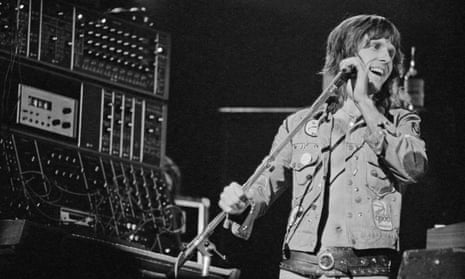
The Classical Influence in Rock Context
Emerson’s classical influences were extensive, ranging from the dramatic flair of Modest Mussorgsky to the intricate counterpoint of Johann Sebastian Bach. He didn’t merely quote classical pieces; he reimagined them in a rock context, transforming piano sonatas and orchestral works into electrifying, synthesizer-driven rock epics. A prime example is ELP’s arrangement of Mussorgsky’s “Pictures at an Exhibition”. Originally a piano suite, Emerson’s adaptation was bold and unapologetic, infusing the work with synthesizer sweeps, bombastic organ lines, and relentless rock drumming. While purists initially bristled at such adaptations, the recording demonstrated that classical music could coexist with the raw energy of rock, and it introduced younger audiences to orchestral composition in a way that was visceral and immediate.
His approach was not mere imitation but transformation. Emerson often used complex time signatures, intricate counterpoint, and modal harmonies, all hallmarks of classical music, but recontextualized them for a rock band. Tracks like “Tarkus” and “Karn Evil 9” exemplify this fusion. On “Tarkus”, Emerson navigates a shifting landscape of themes, from martial fanfares to jazzy improvisations, seamlessly blending virtuosity with accessibility. The piece’s multi-sectioned structure mirrors the narrative scope of classical suites while maintaining the dynamism and power of rock.
Synthesizers and the Technological Edge
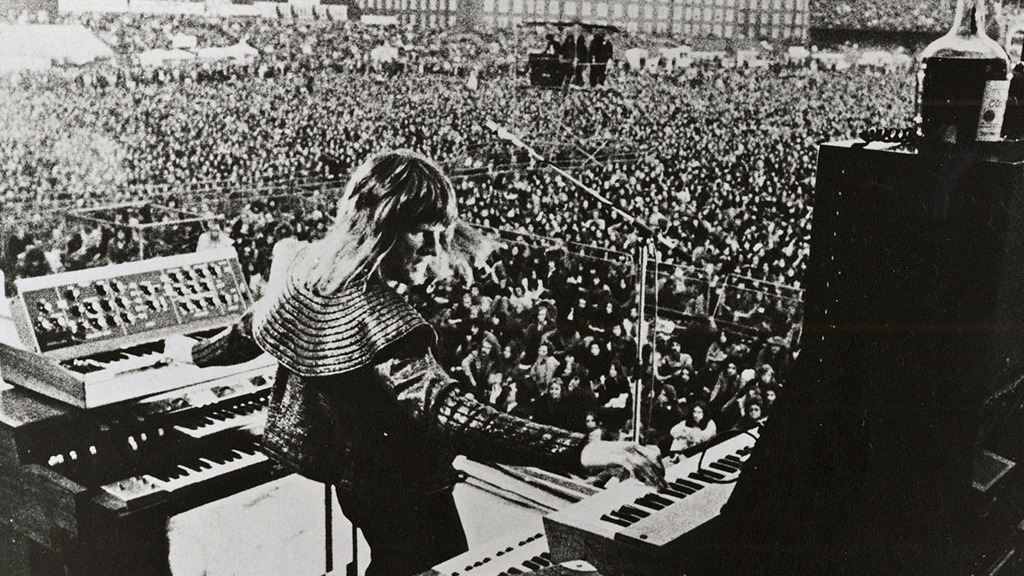
One of Emerson’s most significant contributions to rock music was his pioneering use of synthesizers. At a time when most keyboardists relied primarily on piano or Hammond organ, Emerson embraced the emerging technology of the Moog synthesizer, exploiting its sonic possibilities to create textures previously unheard in rock. The synthesizer was not just a tool for novelty; it became an extension of his expressive voice, allowing him to layer sounds, simulate orchestral timbres, and push the boundaries of musical storytelling.
In “Lucky Man”, perhaps ELP’s most enduring hit, Emerson’s Moog solo is emblematic of his genius. The gentle, melodic rise of the synthesizer transforms a simple folk-tinged ballad into an otherworldly experience. It’s a moment that captures the emotional breadth Emerson could achieve, moving seamlessly between lyrical introspection and technological bravado. This duality—soulful musicality married to electronic experimentation—became a defining trait of progressive rock and cemented Emerson’s status as a visionary.
Rock Virtuosity and Stage Presence
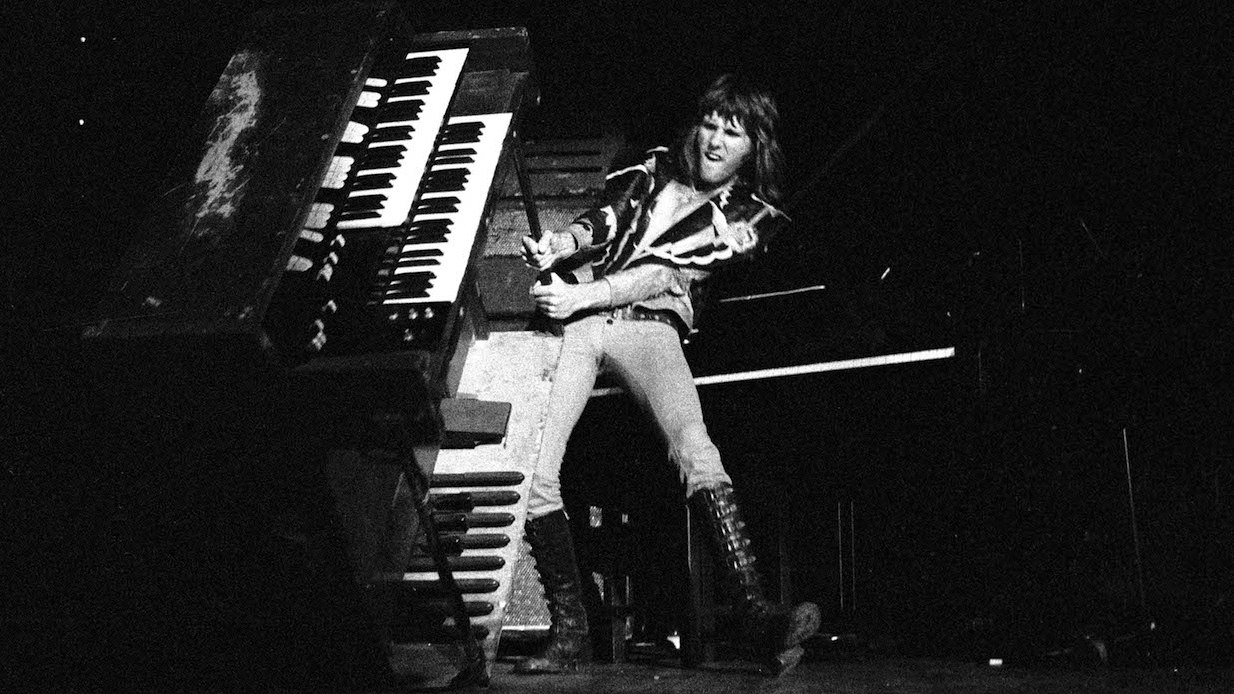
Beyond the studio, Keith Emerson’s contributions to rock were as much about performance as composition. He approached live shows with theatricality rarely seen in rock concerts at the time. Emerson would stand atop his Hammond organ, spin his keyboard around, and even stab it with knives to produce percussive effects, captivating audiences with his flamboyance. Yet beneath the theatrics lay deep musical sophistication. Every gesture, every improvised flourish, reflected an artist who treated rock performance as both spectacle and serious musicianship.
Songs like “The Endless Enigma” showcase Emerson’s ability to navigate complex musical terrain live. With shifting tempos, layered textures, and virtuosic keyboard lines, he could command the stage while making intricate music accessible and exhilarating for the audience. In doing so, he redefined the role of the rock keyboardist, moving it from background accompaniment to central storytelling instrument.
Improvisation and Composition
Keith Emerson was a composer who thrived on improvisation, drawing parallels to jazz and classical traditions. His improvisational skill was not just for solos; it informed his compositional approach. In works like “Hoedown”, an adaptation of Aaron Copland’s piece, Emerson merged classical melodies with rock rhythm, showcasing his ability to reimagine established works while injecting personal flair. The energy of improvisation gave his music a sense of immediacy and risk, making every performance unique.
This willingness to blur genres extended beyond mere covers. Emerson’s original compositions often mirrored the narrative and emotional arcs found in classical music. “Still…You Turn Me On”, for instance, demonstrates his knack for lyrical sensitivity, combining tender melodic lines with harmonically rich keyboard textures, all framed within a rock sensibility. His music could be simultaneously cerebral and visceral, appealing to both the mind and the body—a hallmark of true progressive artistry.
Influence on Progressive Rock
Keith Emerson’s work fundamentally shaped the trajectory of progressive rock. By merging classical complexity, jazz improvisation, and rock energy, he created a blueprint for musicians who sought to expand the boundaries of the genre. Bands like Yes, Genesis, and King Crimson were contemporaries, but Emerson’s emphasis on keyboard virtuosity and classical adaptation set ELP apart.
His influence extended far beyond his immediate peers. Modern rock and metal keyboardists often cite Emerson as a major inspiration, particularly in how to integrate synthesizers and complex arrangements without sacrificing emotional resonance. His adventurous spirit encouraged musicians to embrace technical mastery while remaining expressive, demonstrating that rock could be both challenging and deeply human.
Emotional Depth and Storytelling
One of the most remarkable aspects of Emerson’s music was its narrative quality. Even instrumental pieces often carried a sense of drama, character, and tension akin to operatic storytelling. “Tarkus”, with its shifting motifs, evokes a journey filled with conflict and resolution, while “The Barbarian” channels raw energy and primal intensity. Emerson’s compositions were not mere displays of technique; they told stories, painted emotional landscapes, and invited listeners into worlds that were simultaneously fantastical and profoundly human.
This emotional depth is one reason why Emerson’s work has endured. While trends in rock music have shifted over decades, the fusion of classical sophistication with rock immediacy remains compelling. Songs that might seem technically demanding on paper become emotionally resonant in his hands, and his ability to balance intellect with passion ensures that his music continues to inspire new generations of listeners and musicians alike.
Legacy and Enduring Impact
Keith Emerson’s legacy is impossible to overstate. He did more than elevate the role of keyboards in rock; he expanded the very language of the genre. By integrating classical forms, exploiting emerging technologies, and combining virtuosic skill with theatricality, Emerson reshaped what rock music could be. He proved that rock could carry the weight and complexity of classical composition without losing its energy, accessibility, or emotional immediacy.
Even today, Emerson’s influence is felt across genres. Contemporary progressive rock bands, symphonic metal acts, and even electronic musicians draw from the path he charted. His recordings, particularly with Emerson, Lake & Palmer, remain touchstones for anyone seeking to understand the marriage of classical music and rock. Emerson’s story is a reminder that true innovation often comes from the bold synthesis of worlds—classical rigor and rock rebellion—crafted by a singular visionary willing to defy expectations.
Keith Emerson passed away in 2016, but his music continues to resonate. Each note, whether a delicate piano passage or a thunderous Moog solo, carries the signature of a musician who refused to be confined by genre. His work stands as a testament to the idea that rock music is not just entertainment but an evolving art form capable of profound expression. Through his fusion of classical sophistication and rock dynamism, Keith Emerson not only transformed the soundscape of his era but also left an indelible mark on the future of music.